Rationales in the Dark
Empirical Oversights in Assessing Russian and Chinese Influence in the Western Balkans and the EU’s Eastern Neighborhood
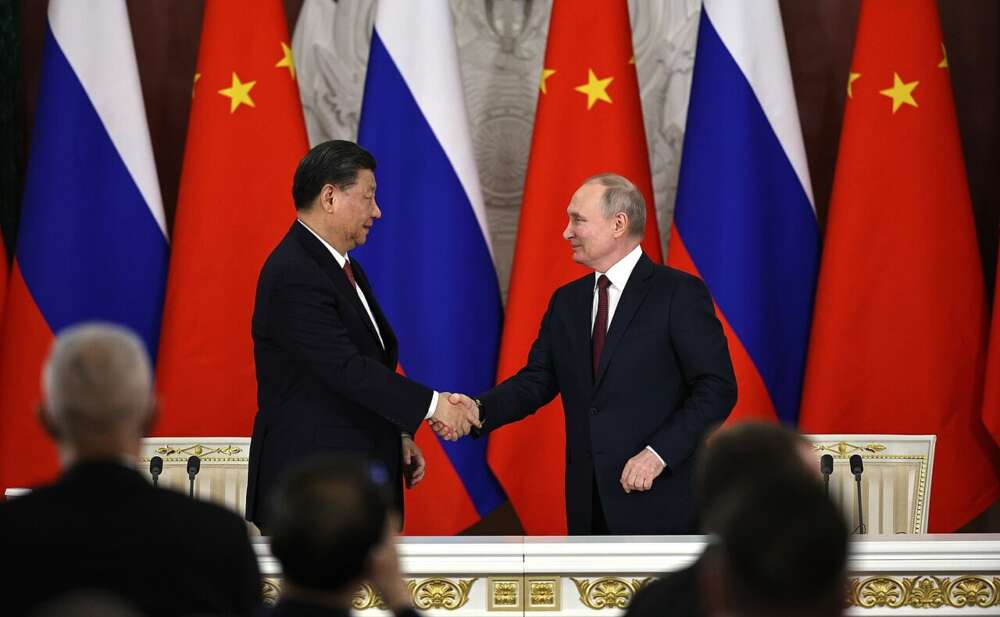
Although scholarship and policy commentary on Russia’s and China’s foreign influencing (meaning deliberate activities by foreign states intended to manipulate political, social, economic, or informational environments to advance the influencing actor’s strategic interests) in the Western Balkans and the EU’s Eastern Neighbourhood has proliferated in recent years, the deeper rationale behind these campaigns remains understudied. This oversight is more than an academic gap: it risks steering policymakers toward ill-informed countermeasures that fail to address the real drivers of malign influence.
Understanding the rationale behind foreign policy decisions is not an easy task: foreign policy preferences are shaped by a variety of factors, including security and economic concerns, domestic political pressures, historical experiences, the psychology of leaders, and other factors (Hudson 2014; Jervis 2017; Prier 2017). Additionally, foreign policies are not monolithic, coherent endeavours but the aggregate of the actions of – sometimes more, sometimes less streamlined – agencies and people (politicians and bureaucrats) with differing rationales. In addition, finding reliable data on the motivations behind foreign policy actions is inherently difficult, especially in closed, authoritarian systems, such as China and Russia. Even where motivations are communicated to the outside, one can never be quite sure if these statements reflect an actual rationale or a legitimation strategy for an action. Perhaps because of this complexity, foreign policy analysis largely focuses on the substance of policies, relegating the rationale behind them to an afterthought or treating them as self-evident.
For policy makers, this can become a serious pitfall: misjudging the motivations (or the scale of intent) of other actors risks designing counter policies that do not stand a chance to alter the adversaries’ behaviour or to adequately prepare for its impact. An obvious case is the Russian full-scale invasion of Ukraine in 2022. Prior to the invasion, one dominant assumption – which we as the authors of this paper subscribed to ourselves – of the Russian rationale was its intention to prohibit NATO and EU membership of Ukraine (Friedrich and Balbon 2022). As scholars pointed out in the aftermath of the invasion, this neglected Russia’s imperialist goals (Oksamytna 2024). This failure to grasp Russia’s true intent is arguably one part of why European countries were ill-prepared for Russia’s eventual full-scale offensive. Other historical examples of failures to analyse the motivations of foreign actors range from misinterpretation of Saddam Hussein’s intentions preceding the invasion of Iraq, to the British misreading of Argentine intentions in the Falklands. As such, while never the sole reason for mistakes, misreadings of other actors’ intentions have undeniably contributed to suboptimal foreign policy outcomes.
In the same vein, the (hybrid) influencing operations of Russia and China in the Western Balkans and the EU’s Eastern Neighbourhood are of pressing concern to EU policy makers, but the rationale for Moscow and Beijing to employ them are ill-understood. Some scholars acknowledge that gaining deeper insight into why states engage in malign influence – whether through disinformation campaigns, economic coercion, or cyber intrusions – would be crucial as it informs the EU’s ability to anticipate, interpret, and counter their actions. However, such approaches remain underrepresented.
We therefore reviewed 51 English language policy reports, scenario reports, and journal articles on Russian and Chinese influencing in three countries in the EU’s Eastern Neighbourhood (Georgia, Moldova, Ukraine) and six Western Balkan countries (Albania, Bosnia and Herzegovina, Kosovo, North Macedonia, Montenegro, Serbia). In our selection we focused on publicly available resources on malign influencing rationales which feed into the policy cycle (including journal articles and think tank reports). Given that we found only very few resources that explicitly dealt with Moscow or Beijing’s intent for foreign influencing in only the nine selected countries, we expanded our search to reports which dealt with Russian and Chinese influencing in these countries generally. We limited our search to work that focused on Russia or Chinese influence in either the EU’s Eastern Neighbourhood or the Western Balkans, excluding other geographies.
We find that Russia’s and China’s rationale to pursue influencing operations is rarely empirically assessed but often treated as a self-evident truth that does not need to be questioned. We illustrate the rationales commonly assumed and the methodologies (not) employed in the literature we reviewed before concluding with recommendations.
This paper was first published by REUNIR on April 9, 2026.