Merz’s Unfinished Foreign Policy Reforms
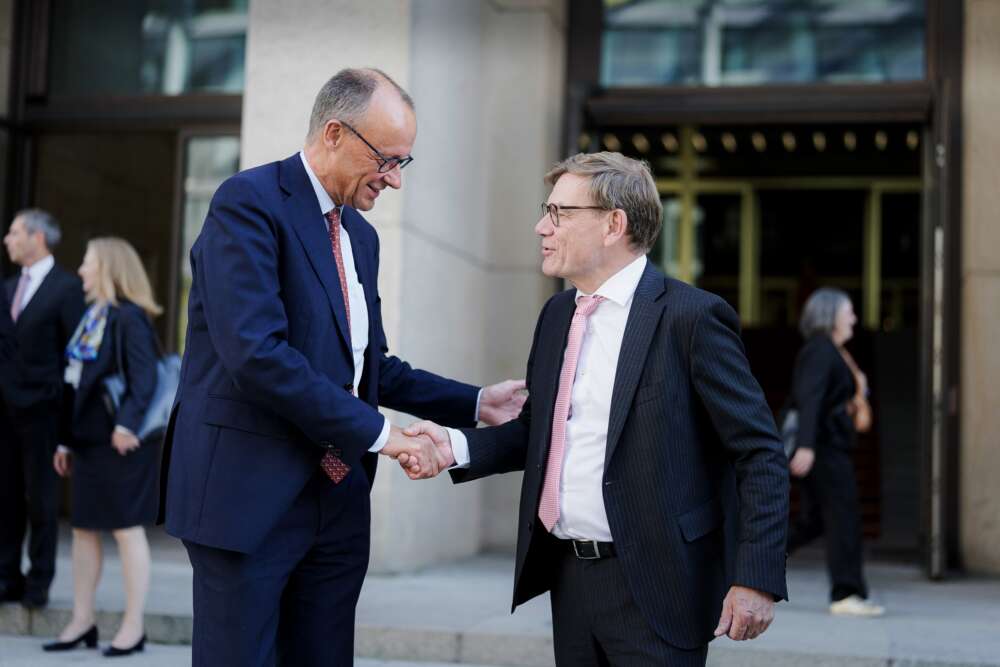
Germany faces a world whose previous order “based on rights and rules” — the foundation of the country’s export-led economic model— “no longer exists,” German Chancellor Friedrich Merz told this year’s Munich Security Conference. Instead, “great power politics, it seems, provides strong, simple answers, at least for the great powers and at least for the time being.” But “as Europeans and, of course, as Germans, [we] are not at the mercy of this world. We can shape it.”
To do so, Merz’s coalition government of his center-right Christian Democrats (CDU/CSU) and the center-left Social Democrats (SPD) has taken overdue steps in reforming the country’s foreign policy and decision-making structures. Establishing a National Security Council has been the signature move toward the change of mindset the chancellor demands. Of course, redrawing organizational charts is not an end in itself, but a necessary step to offset notorious systemic inefficiencies. The current government seems to have recognized this.
With old partnerships, systems, and international rules eroding, the fundamental predictability that the slow system of foreign policy-making Germany relied on is gone. Berlin needs to find big solutions to big problems, from a leadership gap in European security and defense to protecting its interests in the “dangerous game” of power politics. This game’s main players — whether one calls them allies, competitors, enemies or systemic rivals — are callously destroying the pillars of an order that Europeans, more than anyone, have depended on.
To achieve this, German foreign policy needs to step up and do more than reactive crisis management, relying on US intelligence or plans, and running after whatever Washington decides to do in (over)reaction to global events and threats. So, do the reforms come with the necessary rethink of Germany’s expired foreign policy model?
Overcoming the Past
Strategic surprises and lowest-common denominator responses have long been the consequence of relatively independent German ministries, led by different political parties (depending on the set-up of coalition governments). The ministries prioritize distinctions and prizing the cherry-picking of convenient facts over fighting groupthink and building joint, effective policies. In 2025, a late review of Germany’s 20-year military presence in Afghanistan concluded that ministries — the foreign office, the defense ministry, the ministry of economic cooperation, and others — largely made separate plans and decisions based on diverging situational assessments without any clear, realistic, or coordinated long-term goals or strategy.
Germany’s failed Russia and Ukraine policy pre-2022 have demonstrated that a lack of foresight and strategy extends to portfolios such as energy and economic relations. There was little awareness and consideration of the mid-term security risks that dependencies create — problems that Germany’s first-ever National Security Strategy, published by Merz’s predecessor Olaf Scholz (SPD) and then-Foreign Minister Annalena Baerbock (Greens), proved unable to overcome, despite having announced a more forward-looking foreign policy.
Security Council Under Construction
As one remedy, the Merz government established a National Security Council. In it, a fixed group of select ministers, as well as heads of relevant security agencies and occasional outside guests are meant to compare notes and develop joint paths forward. Constitutional powers remained unchanged, with only the cabinet as a whole able to make binding decisions. The lean secretariat in the chancellery consists of only 13 positions split between three teams: a front office, a team to realize joint situational assessments, plus a strategy and foresight team said to be responsible for a pending update to the National Security Strategy. There are also forward-looking exchanges with security policy experts that are supposed to avoid blind spots and surprises.
The council is an achievement in itself — facilitated by the rare coincidence of a foreign minister, Johann Wadephul (CDU), and a chancellor hailing from the same party. But roughly six months into its existence, the secretariat remains a work-in-progress. Its founding director, Jacob Schrot, was replaced as the chancellor’s head of office, while managing council affairs was reassigned to Merz’s foreign and security adviser, Günter Sautter. The fate of the security strategy update remains unclear. The three publicly known council meetings dealt with deciding on measures against hybrid threats, which have been developing for a decade now; the situation in Ukraine; the Middle East and Iran — “classic” cases of reactive crisis management. This is understandable given current events, but the world won’t calm down anytime soon.
Other meetings may be secret, and most of what we see is the result of (lacking) communication and spin. It’s safe to say though that the council has not visibly left its mark in making German foreign policy appear more strategic, integrated, and ahead of the curve. Critics point to Germany’s lurching reaction to the US-Israeli war with Iran: thorough, forward-looking assessments of even close allies’ intentions and plans (or lack thereof) still trickle in too little, too late. Merz’s announcements showed that Berlin is still not arriving at an assessment and position more quickly than in the past. Although this might partly be the result of Merz having to first get the more hawkish parts of his own party in line.
Foreign Office Reform
In November 2025, Foreign Minister Wadephul surprised the foreign office with a major reorganization. A redrawn organizational chart brought traditional security and geoeconomics to the fore, while crisis management, stabilization, and humanitarian aid would no longer have a seat in the famed “D‑Runde,” the morning meetings of directors-general (DGs) with the two state secretaries running the day-to-day business of German foreign affairs.
Many of the changes were long overdue. The new setup streamlines the management of bilateral relations and embassies around the world in four regional DGs for Europe, the Americas, Middle East/Africa, and Asia/Pacific. They will also be responsible for managing the bulk of humanitarian funding and stabilization efforts, which were previously handled by a dedicated DG.
Thematic expertise is reshuffled into three new DGs for security policy (headed by the political director), global order, as well as the EU and geoeconomics. The new security DG follows a longstanding trend among Western diplomatic services by pulling together all security-related files under one roof. Berlin’s version will comprise NATO, the EU’s Common Defense and Security Policy, crisis early warning, arms exports, arms control, and the joint administration of the military/security assistance fund.
While the responsibility for strategic foresight will adequately shift to a beefed-up policy planning unit, all civilian security assistance to partners like Ukraine will be reallocated to country desks, supported by an expert unit attached to the global order/UN directorate — a risky choice with complicated practicalities of spending taxpayers’ money in the German system. It is also the element of the structural reform that has drawn most criticism as it marks a stark departure from Berlin’s decades-long international leadership in targeted, often innovative approaches to conflict management that are as interest-driven as they are intended to save human lives.
Another DG combines EU policy and geoeconomics. With major directorates to cover economic security, climate, energy, and migration, this choice recognizes Germany’s biggest lever on these issues: Brussels. Finally, and probably more importantly than all the reshuffling of desks at the foreign office, Wadephul is cutting posts in Berlin and trying to rebalance the foreign service back toward its historical split: two-thirds deployed abroad, “where our craft is most effective,” as he put it in his takeover speech last May.
All this carries the Merz-Wadephul signature: The EU at the center, greater security and geoeconomic ambition as well as a certain realism — for example in merging the geographic desks for all the Americas as one sphere of influence into one DG.
Development, Stabilization, Reconstruction
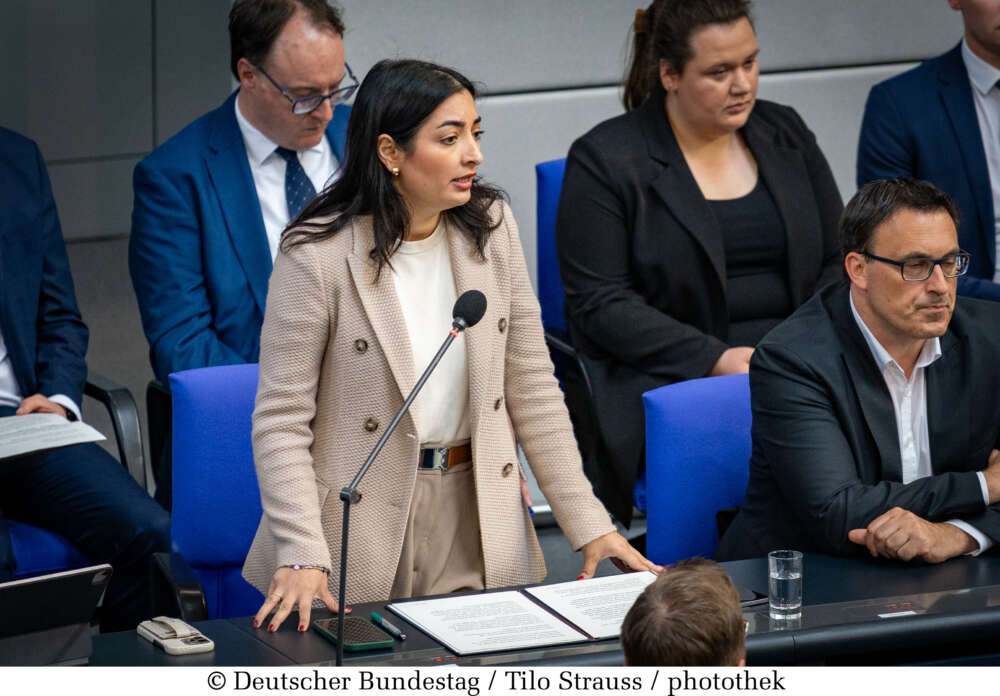
Part of the responsibility for stabilization and prevention is moving to the ministry for development and economic cooperation, the BMZ. Minister Reem Alabali Radovan (read a recent IPQ interview with her here) also presented a reform plan: putting forward four clearly phrased, big priorities that spell out not just winners but also losers, but with changes that are neither radical nor big enough to spark a renewed sense of purpose across a workforce that has become accustomed to worry every four years that it might well be subordinated to the foreign office. The priorities are poverty reduction, stability and security, business and economics as well as strategic partnerships and global public goods, with some defensively framed democracy and civil society support.
The restructured ministry will contain two regionally-focused DGs for reconstruction and stability covering the Middle East and North Africa, the Horn of Africa, and Eastern Europe — security priorities and the main partner regions — and for (other) bilateral cooperation. Two thematic DGs will continue to support multilateral programming, cover concepts and cross-cutting instruments and procedures, as well as data and impact, and (funding) relations with German partners.
Gaps Remain
With the newly unchallenged responsibility for stabilization and reconstruction, the BMZ might hope to regain a more important seat at the table when it comes to peace and order in Europe’s neighborhood. The problem: In 2027 and in budgets that follow, further cuts are envisioned, which are already a point of contention in the coalition.
So, the key question remains how Germany can redefine its role as all past certainties are dwindling. Arguably, European partners have managed to make at least as big a mark as Germany has done, with much less generous spending. Many in Berlin think that Germany’s focus should be squarely on rebuilding deterrence and territorial defense. That’s indeed the most urgent task. But international statecraft requires more than that. Painstakingly rebuilding what Moscow, Washington, and Jerusalem have destroyed cannot be Germany’s only other international ambition. Even the most rudimentary of “peace” deals or reconstruction opportunities in Ukraine or Gaza, for example, will require not just greater leadership but also thought-through policies, close partnerships, new concepts, and money from Berlin to effectively pursue its core security interests.
To redefine its role in an uprooted international system and protect its interests, Berlin needs to add to the structural reforms a serious effort to rethink and reimagine the role it wants to play. Merz appears to share the urgency and necessary ambition, given his insistence on “reflecting our own role” to “change our mindset.” And yet, even the most loyal and well-meaning observers are worried that these efforts so far have been closeted among tiny groups of advisers — a recipe for groupthink, status quo bias, and even nostalgia under much more forgiving circumstances.
The fact that the chancellery unit tasked with strategic foresight, outreach, and developing the National Security Strategy remains unstaffed save for a single person may be accidental but looks increasingly symbolic and reflective of a common fallacy of high-pressure decision-making: The messiness of open debate and the complexity of analyzing next year’s threats feel like an impossible luxury — and yet they are necessary to get to a place where not every move is a frantic reaction to the latest post by US President Donald Trump on social media platform TruthSocial or the latest uncoordinated decapitation strike. Instead, German foreign policy needs to start supporting strategic goals. Better ways and methods to deal with an uncertain future do exist; they are the foundation of strategic policy. Now, the government should finally put them to work.
This commentary was originally published by IP Quarterly on March 26, 2026.