Trends in Violent Extremism, Prevention and Evaluation
Three Years of International Evidence, 2023 – 2025
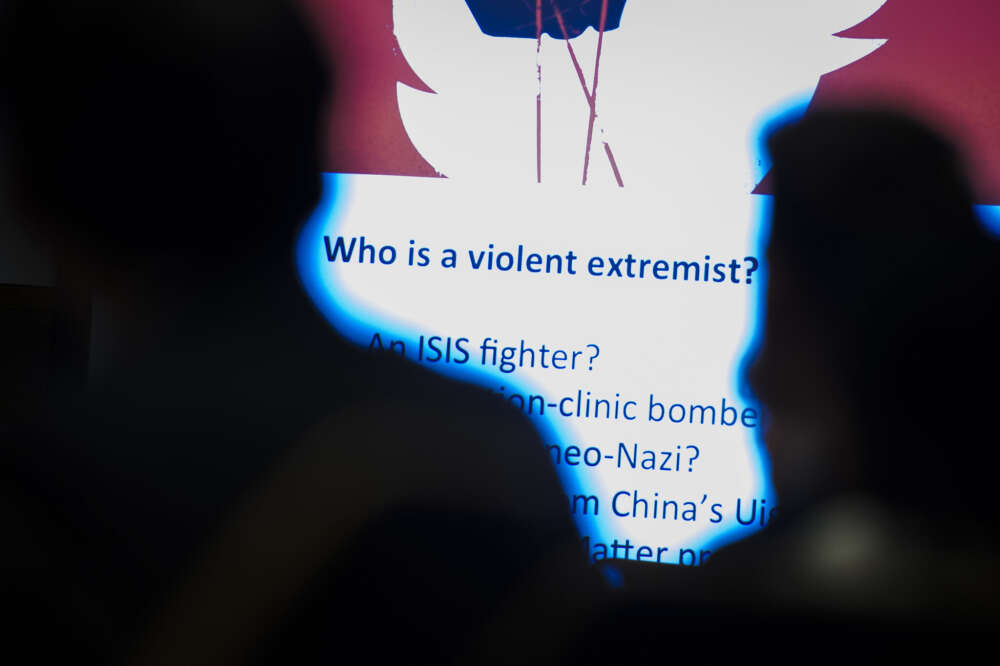
This is the third and final report of a three-year survey series tracking trends in violent extremism, prevention, and evaluation. It is the first study to monitor developments in the field over time and across 11 countries on five continents: Australia, Canada, Czechia, Indonesia, Kenya, the Netherlands, Norway, Spain, Tunisia, the United Kingdom, and the United States. We analyzed these trends over the period 2023 – 2025 through an annual survey among experts on the prevention of violent extremism (P/CVE) and its evaluation.
The effective prevention of violent extremism requires an understanding of what works, what doesn’t, and what the conditions are that enable pathways toward radicalization and violence to be rerouted. Evaluation – the systematic assessment of activities and interventions – is therefore crucial to improving the practice of P/CVE.
With our final report, we provide an overview of the state of the P/CVE evaluation field, tracking and comparing findings from the last three years. Based on the best practices, trends and challenges identified in this study, we develop recommendations for stakeholders to improve P/CVE evaluations and practice.
Main Findings
- Violent Extremism: Across three iterations of an international expert survey conducted in 11 countries across five continents between 2023 and 2025, experts assessed radical Islamist and far-right violent extremism as the most persistent threats. Ideologically fluid, hybrid, and nihilistic forms of violence, as well as transnationally influential right-wing violent extremist groups are on the rise, and increasingly younger people are being radicalized, often online.
- Prevention: In 2025, over 40 percent of respondents said P/CVE in their country was “rather unprepared” to meet violent extremist challenges in the near future. In terms of innovations, experts report a growing recognition of early, holistic prevention and community resilience-building approaches, in contrast to more securitized and reactive approaches. Where the P/CVE field is strongly politicized, turning these insights into practice remains challenging.
- Evaluation: Survey results from 2023 to 2025 reveal little progress in the evaluation of P/CVE activities at the global level. Most experts report that evaluation is under-resourced and in many instances ad hoc and unsystematic. Overall, evaluations critically depend on governments as the main initiators and funders. Experts believe that more funding is critically important but, in many places, not feasible. They also suggest strengthening stakeholders’ appreciation and capacity for evaluations, more high-quality and independent third-party evaluations, and non-financial government support for evaluation. Nonetheless, experts also point to positive developments and best practices, for example, a growing awareness of the value of multi-stakeholder cooperation and stronger methodological contributions from university-based researchers.
- Learning: The greatest problem, for which deterioration occurred between 2023 and 2025, is a lack of evaluation uptake and learning mechanisms that translate knowledge about what works, under which conditions into practical counteraction against radicalization and violence. As the most important remedies, experts emphasize strengthening evaluation culture and incentives, more long-term and learning-oriented evaluation efforts, as well as sharing evaluation results more widely among stakeholders.
Recommendations
- All P/CVE stakeholders should focus on building mutual trust and should approach evaluations as opportunities to achieve more coherent and effective prevention efforts. Where extremist ideologies have moved into the political mainstream or positions of power, there is an increased risk of P/CVE being driven by ideology rather than accountability, evidence and learning. Stakeholders should pay close attention to these dynamics and invest in the constructive relationships needed for learning-based improvements in P/CVE.
- Stakeholders should ensure that evaluations follow learning strategies with clear uptake mechanisms.
- Governments and implementers should prioritize developing uptake mechanisms that ensure evaluation results feed into efforts to improve extremism prevention policies, strategies, programs, and activities.
- Funders and implementers should set goals for evaluation uptake together and agree to engage with possible negative evaluation results for further learning, rather than as a mere performance review of implementers.
- Stakeholders should ensure adequate funding, incentivize high-quality evaluations and make strategic, learning-driven investments.
- Funders, particularly governments, should provide resources for the evaluation of P/CVE activities they support. Where grants cover evaluation costs, funders should require implementers to budget for evaluations at the proposal stage, and implementers should earmark such funds accordingly from the project outset.
- Across all types of evaluation funding, stakeholders should encourage the involvement of independent experts as third-party evaluators or advisors.
- Funders should continue to invest in P/CVE (evaluation) research that responds to evolving extremist threats and supports exchange among all P/CVE stakeholders.
- Funders should continue to invest in and support high-quality meta reviews that synthesize findings from different academic and practice fields within countries and internationally, and enable academic research to continue to drive innovation in the evaluation field.
- Wherever possible, funders should support and enable the sharing of evaluation results and lessons learned, even if results are redacted or summarized for confidentiality.
- Funders should invest in exchange formats that facilitate dialogue and foster informal connections and cooperation between practitioners, researchers, evaluators, and policymakers.
- Wherever appropriate, stakeholders should ensure that formats for sharing evaluation results, research findings and experiences include exchanges and discussions on evolving extremism trends – such as hybrid and ideologically fluid extremism, the mainstreaming of radical and extremist beliefs, youth and online radicalization, and non-ideological roots of radicalization – and their impact on P/CVE efforts and evaluations.
- Stakeholders should invest in building the capacity of implementers and government officials to conduct and manage high-quality evaluations and learning processes.
- Stakeholders should prioritize developing and strengthening evaluation support and capacity-building formats that facilitate exchange and coordination, such as professional networks, interactive training and knowledge hubs.
- Stakeholders should ensure that such evaluation-support and capacity-building formats build on each other rather than funding fragmented, one-off efforts that duplicate existing structures.
This research was funded by the Federal Ministry of the Interior as part of the project “Evaluation and Quality Management in Extremism Prevention, Democracy Promotion and Civic Education: Analysis, Monitoring, Dialogue (PrEval).”
More information on PrEval can be found here and on the project’s website.