Hungary and the Case Against Democratic Fatalism
In an increasingly uncertain world, the temptation grows to cling to apparent certainties, however catastrophic they may be. The liberal West, so the argument goes, is long past its best years. Social polarization has made compromise impossible. The public longs for the simplest of answers. And once autocrats and tech bosses fire up their nihilistic bot farms, it will be every person for themselves.
Abstract fears about the future paralyze us more than certainty about a seemingly inevitable reality does. And so the pendulum of public mood swings easily toward the opposite oversimplification. If Francis Fukuyama’s “end of history” — understood as the triumphal march of the liberal West — did not come to pass, then surely the reverse must be true. Democracy is lost.
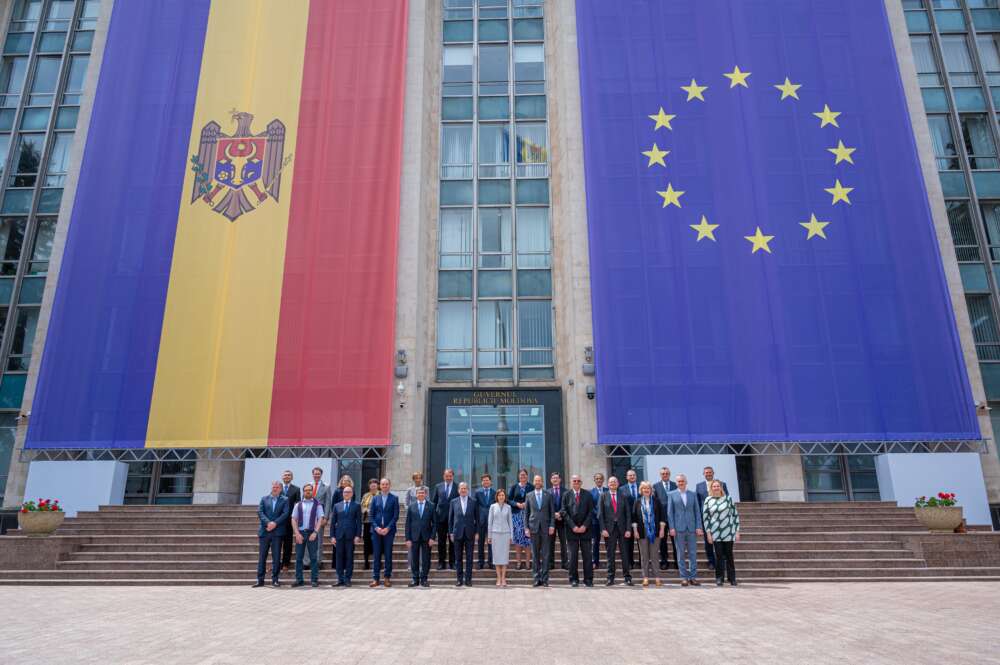
Yet, fortunately, something happens now, and then that gives us pause. Take the moment Péter Magyar swept Viktor Orbán, illiberalism’s shining star, out of the way in Hungary. On top of this, J.D. Vance’s woeful campaign support for Orbán left the global right looking flat-footed. And with Orbán, a whole narrative was defeated too, one that would rather cozy up to Russian imperialism out of fear than stand up to it.
The statistician Nassim Taleb formulated the principle that anyone seeking to estimate the remaining lifespan of an institution, such as democracy, should assume it will last as long as it has already existed. Essentially, the mathematical version of Mark Twain’s “reports of its death have been greatly exaggerated.”
Democracy is more than 2,000 years old; the ideas of the French Revolution are at least 250. That is no reason to grow complacent in democracy’s defense, to declare the EU prematurely saved, or to celebrate Magyar uncritically as a savior. Instead, the task is to draw the right lessons from Hungary. Among them: faith in democratic mobilization, in the power of unifying narratives, and the recognition that a proud population will not let corrupt elites walk all over it forever.
Yes, democracy is hard work. At times it errs, people lose patience, and the mood sours. But rather than elevating trends into self-fulfilling prophecies, we would do well to widen our view, to keep our nerve. Because those same people always yearn for something positive, too. In a democracy, fortunately, they have a choice — and a vote. They can decide otherwise.
A version of this article originally appeared in German in Internationale Politik.