MAGA Goes Global
From Internal Contradictions to Strategic Questions for Pro-Democracy Actors
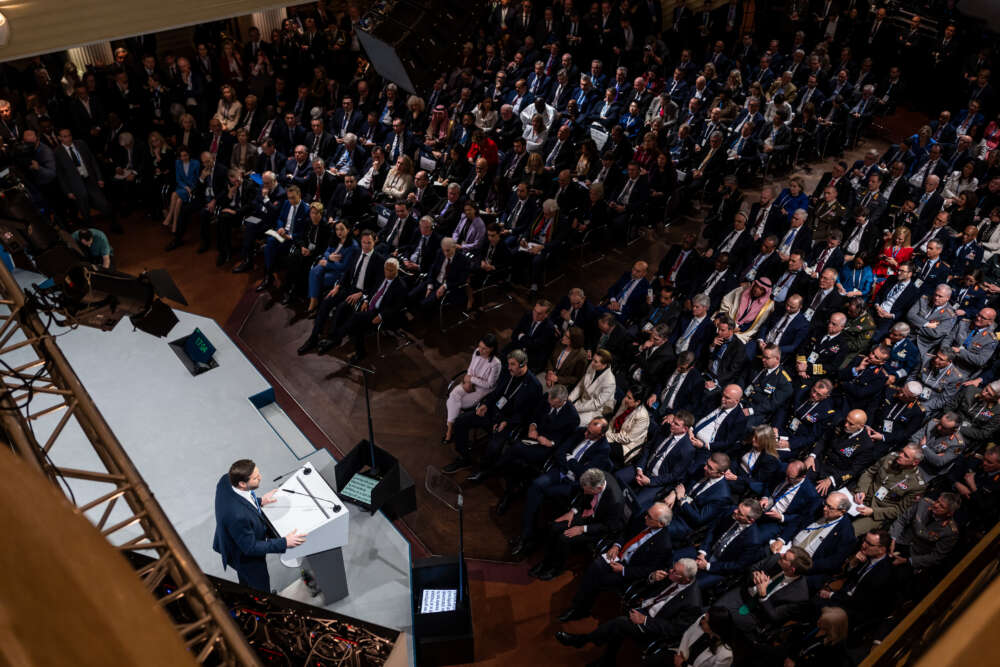
“The threat that I worry the most about vis-à-vis Europe is not Russia, it’s not China, it’s not any other external actor. And what I worry about is the threat from within, the retreat of Europe from some of its most fundamental values.” – JD Vance
On 14 February 2025, US Vice President JD Vance, a leading figure of the Make America Great Again (MAGA) movement, used his speech at the Munich Security Conference to accuse European governments of betraying democratic values. While the speech took Europeans by surprise, it reflected a shift that had been building for years. Far-right actors have not only grown stronger at the ballot box but increasingly contest the meaning of democracy itself. In 2014, Hungary’s former Prime Minister Viktor Orbán announced his aim to build an “illiberal state,” rejecting the premise that democracy must be rooted in civil liberties, individual rights and limits on state power. The MAGA movement and Poland’s Law and Justice (PiS) party have since taken up this model. How these ideas travel shows that far-right movements increasingly operate transnationally, sharing funding, narratives and a common playbook.
International conferences are one place where these ties are built. The Conservative Political Action Conference (CPAC), originally US-based, has expanded to countries including Brazil, Hungary, Israel and Argentina, and groups affiliated with the Heritage Foundation’s “Project 2025” rank among the most influential on this circuit. Through such networks, far-right actors lend each other legitimacy, develop joint strategies and project global strength.
This confronts pro-democracy actors with a serious challenge. I understand these as actors in democracy support, politics, civil society and public administration who seek to defend liberal democracy’s pluralist, rights-based core. Their opponents contest the narratives, norms and institutions on which liberal democracy has been defended, while building a parallel infrastructure of their own. What is at stake is a political struggle over what democracy stands for.
This paper takes MAGA as its case. It is neither the origin of the ‘illiberal turn’ – that template was Orbán’s – nor the only example, but it is arguably the most consequential: a transnational movement that also runs the world’s most influential government. The shutdown of USAID showed how directly Washington’s decisions affect populations worldwide, and MAGA now uses public resources to fund aligned civil society groups in Europe.
The paper starts from the premise that the far right’s seemingly unstoppable rise is partly smoke and mirrors, an image the far right itself works to promote. As current responses such as mapping funding flows and monitoring conferences appear to fall short, demand for more proactive strategies is growing. MAGA’s transnational activities are full of tensions between what it says and what it does, and these seem to offer openings. I argue, however, that exploiting them risks backfiring: it can draw the same criticism back onto pro-democracy actors and possibly strengthen the far right. The paper therefore treats these tensions as dilemmas rather than easy wins. It aims to spark strategic discussion on how to defend liberal democracy without falling into these traps, and how to work toward a resilient democratic future.
After outlining how I conceptualize MAGA, the paper examines three tensions, each tied to a leverage point MAGA exploits: (1) the instruments of democracy support, (2) the notion of national sovereignty and (3) the language of freedom and democracy. It closes with strategic questions whose answers will differ by actor and context. The focus is on MAGA’s relations with Europe. A fuller analysis would need to engage with how anti-liberal and sovereigntist narratives interact with local politics and historical experience in the Global South.
Strategic Questions for Pro-Democracy Actors
Tension #1: Ending Democracy Support vs. Building MAGA Infrastructure
- How should pro-democracy actors prioritize between countering the far right and promoting their own vision of democracy across strategy, activities and funding? Which area – funding, training, networks – should pro-democracy actors focus on?
- Should pro-democracy actors adopt a more partisan approach to defending democracy – e.g., by framing it as a ‘progressive’ battle – or rally the broadest possible coalition?
- Who can fill the resource gap left by the retreat of state-backed democracy support? How can pro-democracy actors adapt operational models and strategies to the available resources?
Tension #2: Preaching Sovereignty vs. Practicing Intervention
- Are MAGA’s foreign policy divisions a permanent break or a temporary conflict? How should pro-democracy actors strategize under that uncertainty?
- Is exploiting the divisions within the global far right an opportunity to seize, or a risky move that could fuel the global anti-elite narrative and strengthen far-right groups at home?
- Should pro-democracy actors contest the far right’s use of concepts such as ‘national interest’ and ‘sovereignty,’ or should they develop and promote pro-democratic versions of their own?
Tension #3: Language of Freedom and Democracy vs. Acts of Repression
- How can pro-democracy actors design and communicate measures to protect democracy, such as rules on disinformation or party bans, without it being reframed as censorship by the far right?
- How can pro-democracy actors make the case for democracy concrete enough to reach people?
- Given that the term ‘democracy’ resonates differently across contexts, how can pro-democracy actors build coalitions broad enough to act together?
• • •