Getting Ahead of Humanitarian Crises
Insights From Our Evaluation of GFFO Funding on Anticipatory Action
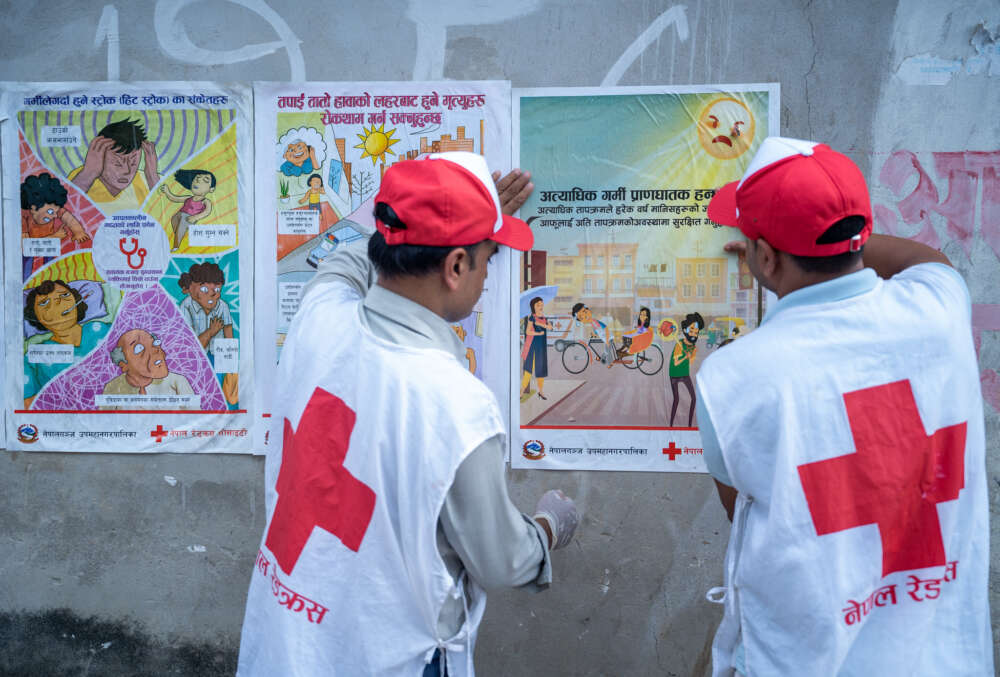
Project Team: Alexander Gaus, Julia Steets, Karla Kröner, with support from Markus Palenberg
Funded by: GFFO
Duration: April 2025-July 2026
Anticipatory humanitarian action aims to respond the very moment a humanitarian crisis is foreseeable, rather than after a crisis has begun. It is grounded in the recognition that many crises – and in particular, those caused or aggravated by extreme weather events like droughts, floods and storms – are (at least partially) predictable through forecasting and early warning systems. A major innovation in the field, this approach aims to make humanitarian action both more effective and efficient.
Germany has been a lead donor in the field since 2021. The federal government committed to allocating at least 5 percent of its humanitarian budget to anticipatory action, achieving a target of 100 million euros funding by 2023.
To assess whether Germany’s funding achieves its objectives and to gather insights for future funding, the German Federal Foreign Office (GFFO) commissioned the Global Public Policy Institute (GPPi) to conduct an independent evaluation of its anticipatory humanitarian action portfolio. The evaluation analyzed (1) to what extent the GFFO’s objectives in anticipatory humanitarian action have been achieved, (2) how efficiently the funds were used, (3) what factors influenced the effectiveness and (4) efficient use of resources, and (5) how effective the coordination was with other actors in the field.
Key Findings
Political backing: Over the past decade, anticipatory action has evolved from a niche concept into a widely recognized approach within the humanitarian system. GFFO has played a central role in this shift through key political initiatives, funding, partnerships, as well as through learning and evidence generation.
Coherence: The evaluation shows that GFFO’s portfolio is broadly coherent with the strategic objectives of German humanitarian assistance, and its breadth has provided a robust basis for piloting different approaches across diverse contexts. But the evaluation also finds that strategic gaps remain: the linkages between “build” components (like developing anticipatory frameworks) and “fuel” components (such as financing trigger-based activations, where pre-agreed indicators, like a flood-risk threshold, automatically release funding before a crisis fully hits) are often weak, local early action plans are only partially harmonized, and there is no clear prioritization of partners or regions.
Effectiveness: Here, the evidence is unambiguous – early action demonstrably helped prevent irreversible harm, reduce losses and damage, stabilize livelihoods, and strengthen affected populations’ capacity to cope and act while maintaining their agency. It is also a way of support clearly preferred by communities themselves. The evaluation found no negative effects of GFFO’s anticipatory action approach in the case study countries. Anticipatory action also generated positive system-level effects: it strengthens national leadership, technical coordination and early warning systems.
Efficiency: Past evidence shows that acting early is usually cheaper than responding only after a crisis hits. But how much cheaper depends on a few practical factors: how large the aid activations (the release of funding) are, whether they can be scaled up and whether early action plans can be reused rather than rebuilt each time. In the cases the evaluation reviewed, these conditions were only partly in place, limiting efficiency gains. The evaluation concludes that GFFO’s full efficiency potential has not yet been realized.
Further opportunity to increase anticipatory action’s impact lies at the edges of GFFO’s mandate. Anticipatory action has clear conceptual and operational links to development cooperation and climate change adaptation, and examples collected in the evaluation show these links can work well. However, to date approaches linking anticipatory humanitarian action with neighboring fields have remained largely ad hoc, driven by implementing partners rather than anchored in strategy or political steering.
Scaling Up Anticipatory Action Together
The evaluation’s recommendations mirror these findings:
- Raise the funding target to a 10 percent threshold and anchor it politically. With budget cuts making the current 5 percent target effectively halve absolute funding, GFFO should raise its commitment and use this as a signal to encourage comparable pledges from other donors.
- Focus future funding on priority countries for German humanitarian assistance or development cooperation. Concentrating both pooled and project-based funding on contexts priority countries, where enabling conditions are already in place, or can realistically be established, would allow for stronger strategic steering and political anchoring within the government.
- Sharpen the portfolio through more “fuel” funding, stronger complementarity, better efficiency data and continued investment in learning.
- Actively promote the use of development and climate finance instruments to scale anticipatory action beyond what GFFO can achieve alone. Stronger cooperation with the German Ministry for Economic Cooperation and Development (Bundesministerium für wirtschaftliche Zusammenarbeit und Entwicklung, BMZ) and other ministries, along with advocacy for dedicated climate finance windows, would help leverage GFFO’s investments for broader impact.
Read the evaluation Executive Summary with concrete measures for these recommendations here, and the full evaluation report here (in German).
The evaluation drew on document analysis, 152 expert interviews, an online survey of partner organizations, and case studies with field visits in Ethiopia, Kenya and Mozambique. The survey received 129 responses from 64 organizations. In each case study country, the evaluation team combined interviews with implementing partners with focus group discussions involving affected communities, examining target achievement, relevance and effectiveness across the selected interventions.