The Perfect Storm
How to Deal with Scarcity, Power Shifts and System-Wide Crisis in the Humanitarian Sector

Over the past years, the aid sector has witnessed the brewing of a “perfect storm,” leading to massive cuts in (humanitarian) aid budgets. These cuts will likely lead to more suffering and mortality, creating dynamic ripple effects that are not yet well understood.
This contribution looks at the new reality of humanitarian aid. Julia argues that aid actors and analysts should shape a realistic narrative about aid, anticipate the more dynamic effects of the cuts, and keep investing in efforts that improve lives in the longer-term. Finally, they should cut some of the middlemen and excessive privileges in the system. A Spanish version of this article has been published by Revista Tiempo de Paz and many others have contributed to a related discussion on LinkedIn.
Undermining the Legitimacy of Aid
Over the past years, funding for humanitarian aid has declined sharply. At its peak in 2022, over 43 billion USD in humanitarian aid was recorded. Contributions at the beginning of December 2025 stood at just over 21 billion for that year and projections anticipate further contractions in the years to come.
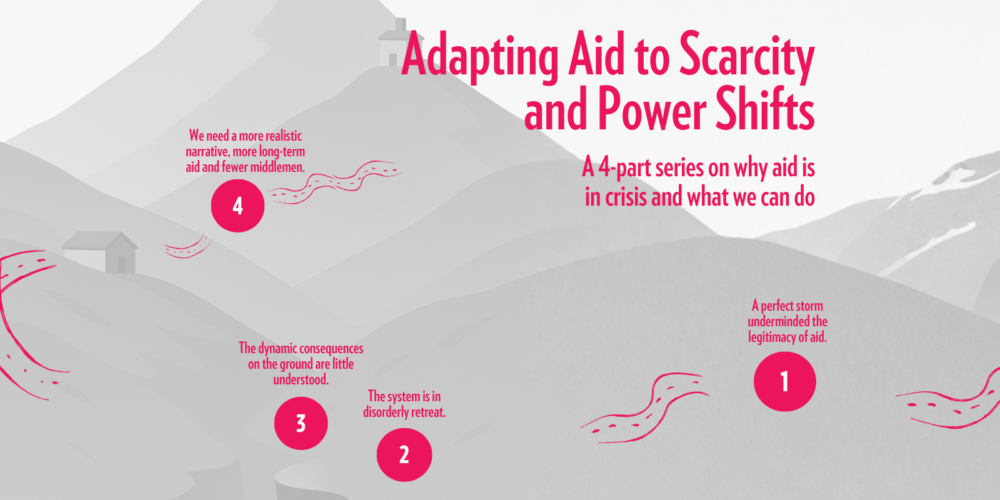
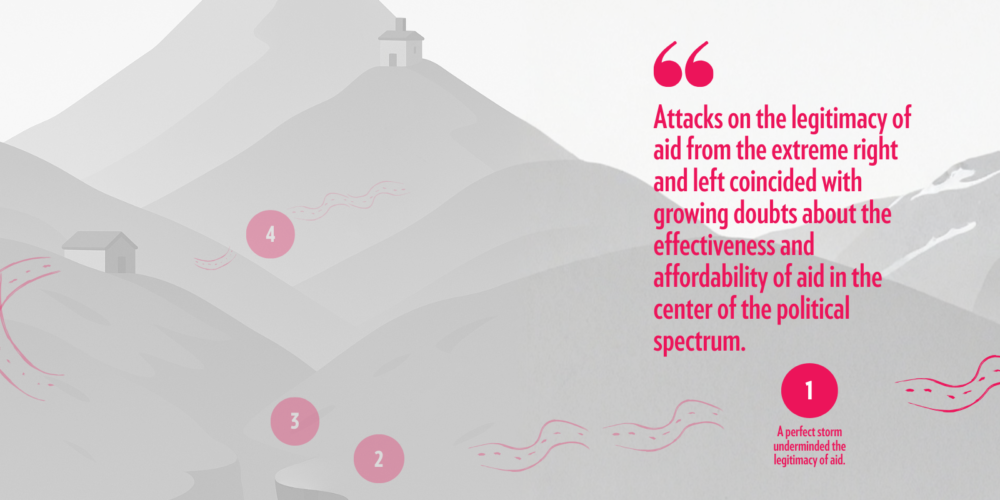
Several factors came together to create an almost perfect storm that undermined the legitimacy of aid while shifting the priorities of key historical supporters: attacks on the legitimacy of aid from both the extreme right and the left coincided with growing doubts about the effectiveness and affordability of aid in the center of the political spectrum. At the same time, as the waning hegemonic power, the United States abdicated its global responsibilities and allied European countries adjusted their priorities accordingly.
Critiques from All Sides…
The most visible attacks on the legitimacy of aid have been coming from the (extreme) right of the political spectrum. From the early Brexiteers to US President Trump’s MAGA movement, official development aid (ODA) has been a lightning rod for right-wing forces across Europe and North America. Carefully curated stories about inefficient or misguided aid projects have been fueling the general outrage of these political groups against bureaucracies seen as bloated, wasteful and corrupt. Their typical “us vs. them” stance means that aid is only acceptable if it demonstrably serves the national interest.
At the same time, left-leaning forces have long been criticizing aid on different grounds. Some critics see development and humanitarian aid mainly as tools to preserve existing power structures and enable the continued exploitation of developing countries. Other critics point out that aid can have colonialist or racist streaks and that it can have negative side-effects like dependency.
These attacks are meeting doubts voiced by the broad middle of the political spectrum. With many countries still relying on aid after decades of investment and examples of ineffective projects making the rounds, large parts of the general public doubt whether aid works. Many are also concerned about the lack of investment in domestic infrastructure and social services, and question whether scarce public resources should be allocated to aid.
And while some critics carefully distinguish between different types of aid1 the broader political and public debate usually doesn’t. Development and humanitarian aid have therefore been thrown into similar crises of legitimacy.
… Are Magnified by Global Power Shifts
Power politics provides another lens for understanding the current aid crisis. It is no coincidence that the US has been by far the most generous provider of aid over the past decades. After the end of the Cold War, the US was the world’s only superpower. This role brought important responsibilities with it: guaranteeing the security of allies, supporting global rules and governance systems, and sending aid to poor and crisis-affected countries.
In recent years, the rise of China as a competing superpower has increasingly challenged the US’s hegemonic role. The drastic foreign policy changes introduced by the current Trump administration show that the US is abdicating its hegemonic responsibilities, including those related to aid and security. This also affects European commitments to aid. The US’s reduced commitment to guarantee European security drives up military expenditure in Europe and gives European governments another argument for cutting their aid budgets. China, in the meantime, has driven up its global investments as part of its growing role as a superpower, but it has not been using the traditional aid channels established by the West. Its contributions to the humanitarian system, for example, have stayed well below one percent of total funding.
Downsizing Humanitarian Aid
The significant reduction of aid budgets, of course, has major consequences for aid organizations. Some organizations have had to close, most had to significantly reduce their workforce and activities.
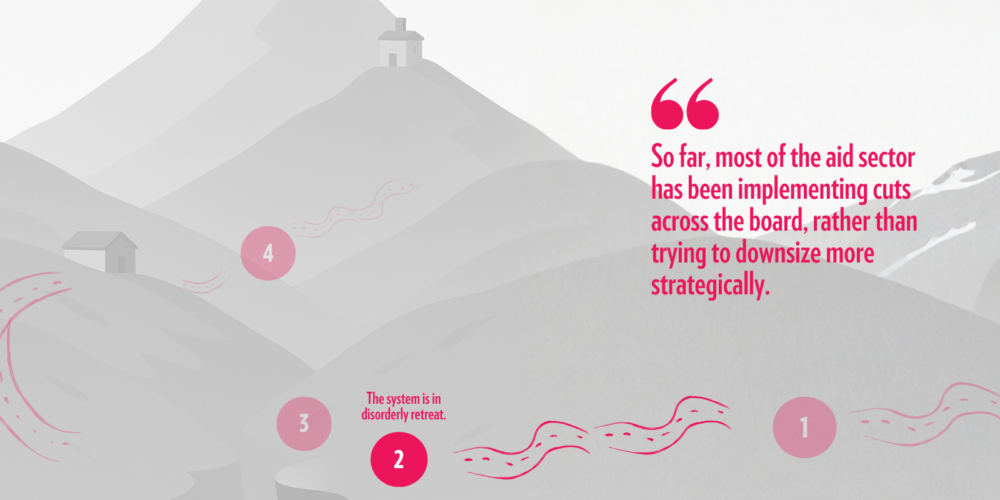
So far, most of the aid sector has been implementing cuts across the board rather than trying to downsize more strategically. Most organizations, departments and individual aid workers focus on arguing why their own work is most important rather than on what a broader vision and reasonable division of labor could look like. Attempts to discuss where aid actors add most value and where they should strategically disengage are usually met with fierce resistance. Mirroring those discussions, most organizations reduce their workforce across the board rather than protecting some areas while closing others.
Why? Several factors drive this disorderly retreat and hinder a more strategic approach to downsizing:
- It’s human. Managers in aid organizations have a responsibility vis-à-vis their staff and the people they are supporting. We would therefore expect them to do whatever they can to protect their organizations and programs. Similarly, it is natural for individual aid workers to try and protect their families’ livelihoods and to defend their contributions as meaningful.
- Most organizations act under time pressure. Conditions of scarcity are known to limit people’s bandwidth for broader and more strategic reflections and actions. Time pressure compounds this phenomenon. At the beginning of 2025, the Trump administration announced an immediate freezing of aid. Other key donors like the German government also reduced their humanitarian contributions by over 50 percent from one year to the next. This gave aid organizations little time to plan and prepare for their downsizing. Many organizations were also slow to react, holding out hope for US funding to resume or for other donors stepping in. Once it was clear that restructuring was inevitable, it had to be done more urgently and more brutally.
- Donors shy away from tough, coordinated decisions. The ability of donor organizations to think and act strategically should have been less affected by conditions of scarcity and time pressure (except for USAID, which was brutally dismantled by the Trump administration). With many of their recipients on the brink of insolvency, donors also would have had much greater power to set strategic priorities; for example, by deciding jointly which organizations to keep and which to close, or what areas of activities and engagement to keep and which to close. However, coordinated donor action has been remarkably absent from the current restructuring of the aid system.
Little-Understood Dynamic Consequences on the Ground
Several studies have tried to anticipate the likely consequences of the aid cuts on the ground. A recent Lancet study, for example, focuses on the reduction of USAID funding for health. Past research has shown that USAID funding brought mortality rates related to diseases like HIV/AIDS and malaria down. The study estimates that mortality rates are likely to increase again as a consequence of the cuts, resulting in 14 million deaths by 2030. Similarly, a study by the Gates Foundation estimates that a 20 percent reduction in global health funding would lead to 12 million additional child deaths by 2045 and a 30 percent reduction to 16 million more child deaths by 2045.
Estimates like these are important to highlight the impact aid had in the past and to raise awareness about the potentially grim consequences of the cuts. However, the estimates are based on a largely linear logic: they assume that deaths prevented in the past will result more or less directly in additional deaths in the future as aid is reduced. This way of thinking neglects that in practice, processes of change are dynamic, not linear. A commentary in The Lancet criticizes the study quoted above on exactly those grounds.
Some of the dynamics created by the aid cuts are positive. In some cases, governments step in to cover gaps. The Nigerian government, for example, which has access to substantial resources due to its oil exports, approved additional spending to cover gaps in HIV/AIDS and malaria programs and to produce required drugs and kits domestically. In other cases, market dynamics cushion some of the effects of reduced aid. In Kenya, for example, food prices fell following the aid cuts, somewhat reducing the cuts’ negative effects.
Aid workers are also sharing an increasing number of anecdotes of how affected people seek alternative solutions to their situations as aid reduces or falls away: refugees are more quickly picking up opportunities for unskilled jobs, and young people in drought-prone areas are giving up traditional lifestyles to seek jobs in cities. These last examples already show an ambiguity: they may result in people finding more sustainable arrangements in the long term, but they can also mean that people are forced to accept dangerous, degrading or exploitative jobs for survival.
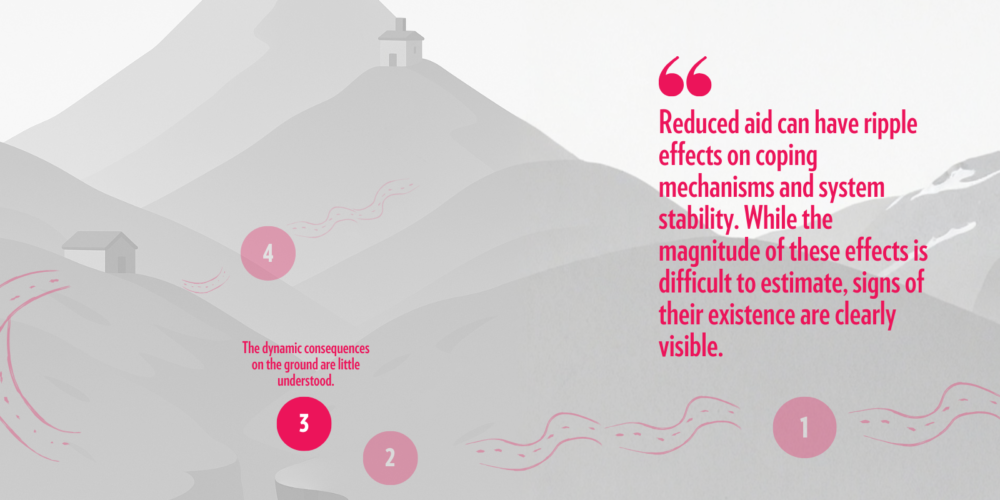
The likely negative dynamics created by the aid cuts are more worrying. Reduced aid can have ripple effects on coping mechanisms and system stability. While the magnitude of these effects is difficult to estimate, signs of their existence are clearly visible:
- Reduced availability of other coping mechanisms: Across the world, a key mechanism that helps people get through crises is to borrow money and to support each other. As aid reduces or stops, more people in crisis situations are likely to have so little that they are no longer able to support others. And without the expected income from aid, their ability to borrow money dwindles. A recent study in a refugee camp in Kenya, for example, finds that aid cuts did not only result in worse nutrition, food security and household expenditure, but also led to a collapse of the informal credit system through which shopkeepers had regularly provided food on credit to refugees.
- Increased violence and criminality: Aid cuts can also undermine public order. Some groups that have been highly dependent on aid turn to protests and violence when aid is cut. In 2025, protests against aid cuts in the Kakuma refugee camp in Northern Kenya, for example, turned violent on several occasions. Broader statistical analyses of crime rates or attacks against aid workers and their potential association with aid cuts are not (yet) available.2 However, existing research shows that regular welfare payments are associated with lower crime rates and that “aid shocks” increase the risk of violent conflict. This suggests that the current aid cuts may have a more generally destabilizing effect.
- Increased migratory pressure: Finally, aid cuts influence people’s decisions on migration. The UN High Commissioner on Refugees and many other supporters of aid have been arguing that more people will try to seek shelter in Europe as aid and development programs in their regions are slashed. Available data does not support this claim: as stronger mechanisms to deter and intercept irregular migrants are put in place, the overall number of people arriving in Europe has dropped, not gone up. It is much more plausible that reductions in aid are accelerating migration from rural to urban areas, driving up levels of destitution in cities where economic development cannot keep pace with increased migration. This, in turn, is highly likely to drive those who try to make their way to Europe or to other destinations to take more risks.
Options for Dealing with the Current Situation
These examples and reflections show that the current aid cuts have far-ranging effects, not all of which we are currently able to foresee. Voices have called for “doing more with less” in this situation. Given how drastic the budget cuts are, such calls seem cynical. At the same time, there is a real risk that the crisis will lead to worse, rather than better, aid practices. The spirit of competition increases and cooperation suffers; organizations fall back on old habits and ditch recent innovations and improvements.3 Cuts applied across the board also mean that no area of work gets done properly. To make the best of the little we have left, donors, aid actors and analysts should take the following four considerations to heart:
- Shape a realistic narrative:To restore trust in aid (and in aid actors), aid actors and analysts need to find a middle ground in how we talk about development and humanitarian aid – one that accepts the existing problems and deficits without throwing the baby out with the bathwater. The narrative should acknowledge where progress has been made (e.g., on life expectancy, maternal and child mortality, and education), where it is lacking (e.g., economic growth based on aid) and where negative side effects can occur (e.g., unsustainable situations permanently dependent on aid).
- Anticipate (and work with) dynamic effects: Aid actors and analysts need to make more effort to anticipate what dynamic effects the aid cuts could have. Since these can be difficult to predict, they need to observe carefully how situations change on the ground to update the assumptions made. If, for example, humanitarian aid is cut in areas that are chronically unstable and food insecure, we should anticipate migration from rural to urban areas to accelerate. Some of the remaining aid resources should be used to support this process through urbanization and industrialization strategies, rather than investing most of them in trying to maintain life situations that have become unsustainable.
- Don’t only prioritize life-saving assistance: Organizations under stress tend to revert back to what they know best, not necessarily to what is best. In the current funding crisis, many humanitarian organizations are following the UN humanitarian chief’s call to “hyper-prioritize” and are focusing on providing short-term, life-saving assistance. One of the conditions of the US government’s recent humanitarian contributions, for example, is that they can only be used for life-saving activities. Yet, this is exactly the type of aid that creates dependency in chronic crises. Instead, humanitarian funding should focus on populations affected by an acute shock; a greater share should be invested in resilience, crisis prevention and anticipatory actions, which have demonstrably better returns on investment than traditional life-saving aid. This would also reflect the preferences that people living in crisis situations have expressed the world over.
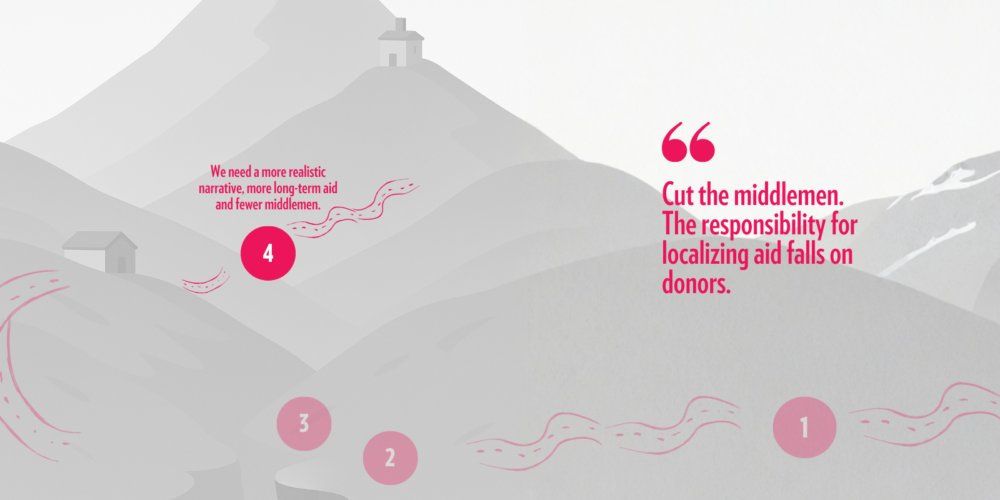
- Cut middlemen and excessive privileges: Finally, donors should change the way they allocate their aid resources so that some of the “middlemen” fall away. The humanitarian system has long been criticized for using long chains of subcontracting. This has led to a proliferation of expensive positions in international organizations linked to far-ranging privileges. It is no surprise that little progress has been made in implementing the many promises to localize aid with such strong institutional and personal incentives in place.4 The responsibility for localizing aid – and reaping all the efficiency gains this promises – therefore falls on donors. They should channel a much greater share of their humanitarian resources through pooled funds at the country level – as the US government has recently announced — and request that these funds be used for supporting local and national organizations.
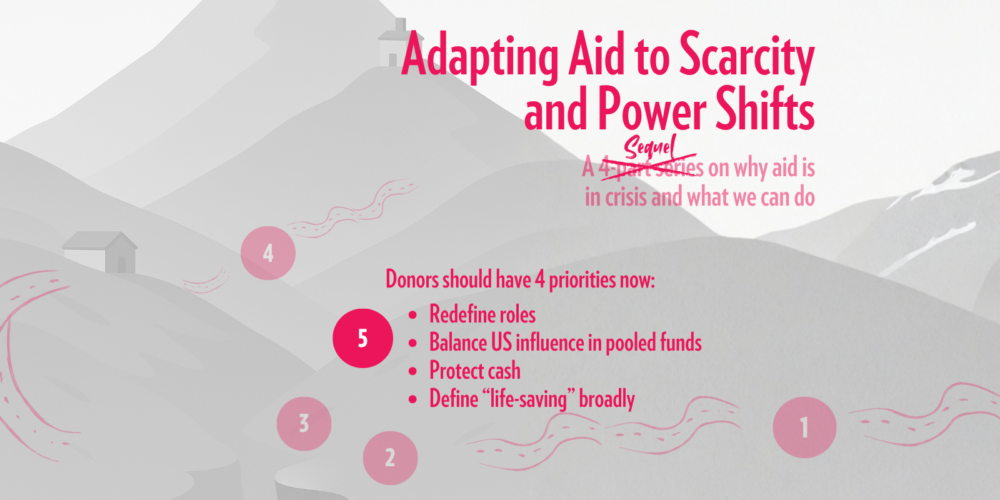
What Donors Should Do
Redefine Roles
Donors need to articulate their vision for the aid system and take tough decisions accordingly. What are the key functions of a future humanitarian system, who should exercise them and what should organizations stop doing? Where, for example, can local organizations take the lead on delivering aid and internationals focus on diplomacy, fundraising and quality control rather than direct operations? Few organizations will voluntarily give up roles. Tough donor decisions on what (and what not) to fund are therefore necessary.
Balance US Influence in Pooled Funds
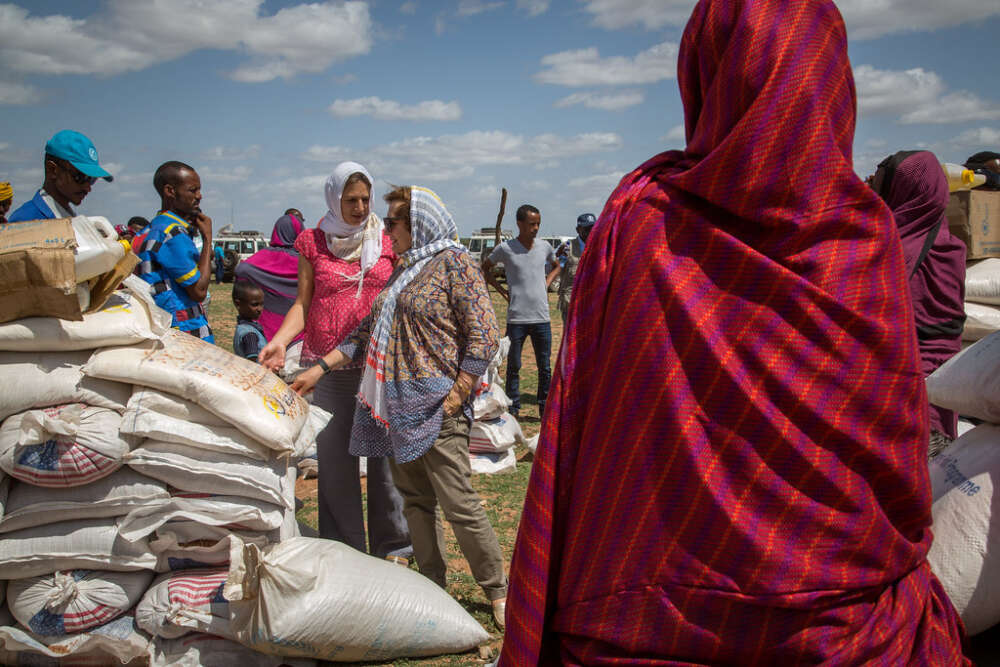
Much of the remaining US humanitarian funding will flow through pooled funds. These offer a great opportunity to strategically prioritize and localize responses. However, US funds may not be used to support local organizations and other restrictions running counter to the humanitarian spirit and principles may still emerge. Other donors should therefore double down on their support to pooled funds and use their coordinated weight to ensure pooled funds support localization and principled humanitarian action.
Protect Cash
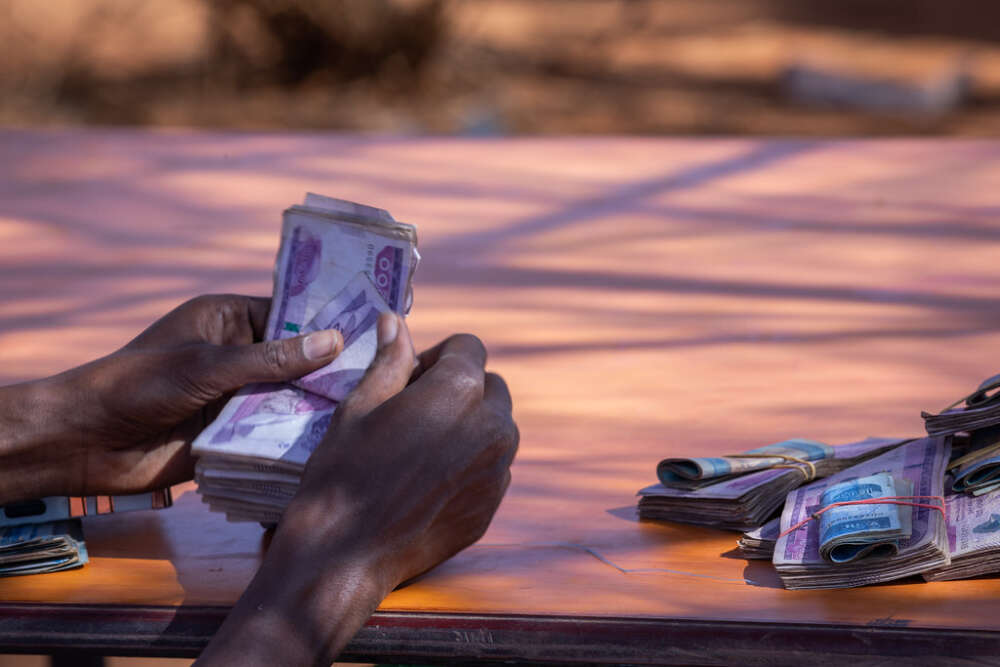
It has been shown a million times that assistance given in cash is in most cases more effective, efficient and dignified than in-kind assistance. Yet, the share of assistance provided in cash (not just the absolute numbers!) is currently falling. Donors should therefore make their support conditional on a rising share of assistance being provided in cash.
Keep a Broad View on What is “Life-Saving”
Faced with budget cuts, aid organizations prioritize life-saving assistance. What this entails is still open to interpretation. We know that prevention and anticipatory action can be more effective at saving lives than classic humanitarian response and that it is not sustainable to remain in short-term life-saving mode in the long run. Donors should use their influence now to ensure that “life-saving” is broadly defined to encompass activities that prevent and mitigate crises and strengthen resilience to future shocks.
A Spanish version of this article has been published by Revista Tiempo de Paz and many others have contributed to a related discussion on LinkedIn.
Footnotes:
1. Dambisa Moyo’s well-known classic Dead Aid, for example, focuses its critique on “systemic aid”, i.e. regular transfers from government to government or via institutions such as the World Bank, not emergency aid in response to specific crises or charity aid designed to achieve specific purposes.
2. As of early December 2025, the Aid Worker Security Database showed an increase in attacks in 2024, but not in 2025 (which may also be related to the fact that fewer aid workers were present on the ground).
3. One such key innovations is to provide humanitarian assistance in the form of cash, rather than in-kind contributions. Based on very solid evidence about the benefits of cash-based assistance, the use of cash was increasingly steadily as long as humanitarian budgets in general were rising, amounting to almost 24 percent of international humanitarian assistance at the peak of the system in 2022. With reducing budgets, cash assistance has fallen not only in absolute terms, but also as a proportion of total spending (Calp Network projections estimate cash to account for less than 15 percent of international humanitarian assistance in 2025).
4. A notable exception is Save the Children, which recently announced that it would stop seeking funding from country-based pooled funds to open space for local and national actors.