Europe’s Trade Power and the Race Against Deindustrialization
Europe faces huge external economic pressure from both China and the United States (US). Time is running out. Europe’s deindustrialization is already a fact. Germany alone is losing some 10,000 industrial jobs every month. The main causes of European deindustrialization are domestic: high energy prices, poor infrastructure, overregulation, and too little private investment in future technologies. Chinese industrial overcapacity is accelerating deindustrialization and making even these internal challenges harder to tackle. Heavy supply-side state support, combined with weak domestic demand, pushes Chinese firms to export to global and European markets, distorting prices and undermining foreign competitors. All the while, US President Donald Trump’s deliberately random use of tariffs has added to global uncertainty and has hit the European economy hard.
Europe’s instinct is to bring international trade misconduct before the World Trade Organization (WTO). But this is no longer a viable solution. The US has rendered the Appellate Body of the WTO Dispute Settlement Body dysfunctional and can now appeal any first-instance ruling ‘into the void’: it lodges an appeal that no functioning tribunal can hear, leaving any ruling against it permanently unenforceable.
With China, the European Union (EU) has an alternative to the Appellate Body in place. Both the EU and China are participants in the Multi-Party Interim Appeal Arbitration Arrangement (MPIA), which was established in 2020 and now functions as an appeal stage. However, the problem with China is different, but no less real. While the judicial route works, it is too slow and too narrow for the challenge. WTO cases grind on for years. The EU’s recent patent dispute with China ran three and a half years, from complaint to binding award. Overcapacity, meanwhile, can hollow out a sector in a fraction of that time, and no panel can rule against an economic model of subsidized overproduction, only against individual measures, one case at a time.
This does not mean that the EU should break WTO law. European leaders, including the president of the European Commission (EC), have reiterated their commitment to international law – in sharp contrast to President Trump’s approach. This strengthens the EU’s reliability and credibility. But the EU needs faster and more effective ways to defend its interests while upholding the rules-based international trading system. Otherwise, Europe will soon face a point of no return where entire industrial sectors disappear. The cost would not only be economic and social; it could also deepen distrust in the ability of centrist political parties to lead Europe into a prosperous future.
Stronger EU Leverage and Deterrence
In mid-June, the European Council mandated that the EC make fuller use of the EU’s existing trade defense tools and develop new ones. But the mandate is vague. Although member states recognize the need to combat deindustrialization, they fear retaliation and want to avoid an escalating trade war. This leaves Europe trapped in a psychology of weakness. The EU can overcome this only by adopting measures that both deter Washington and Beijing from ignoring European interests and, where deterrence fails, give Europe enough leverage to negotiate an end to trade conflicts quickly enough to avoid economic damage.
This is easier said than done. Still, Europe can defend its interests while preventing new trade wars. China faces enormous structural economic challenges. More than ever, Beijing relies on exports to generate growth – domestic demand is likely to remain weak. This year, exports could contribute more than half of China’s real Gross Domestic Product (GDP) growth. Access to the European single market is essential. Europe’s share of Chinese exports is slightly below 15 percent. But Europe is not just a large market for China; it is a premium one. For the same goods, Chinese firms charge Europeans far more than they charge the rest of the world, on average about two and a half times more. For cars, this discrepancy is even greater: more than three times. Some of the higher profit margins reflect quality and branding, but much of it simply reflects that European consumers and companies can pay, and do. In other words, Europe is where a great deal of China’s export profit is actually earned.
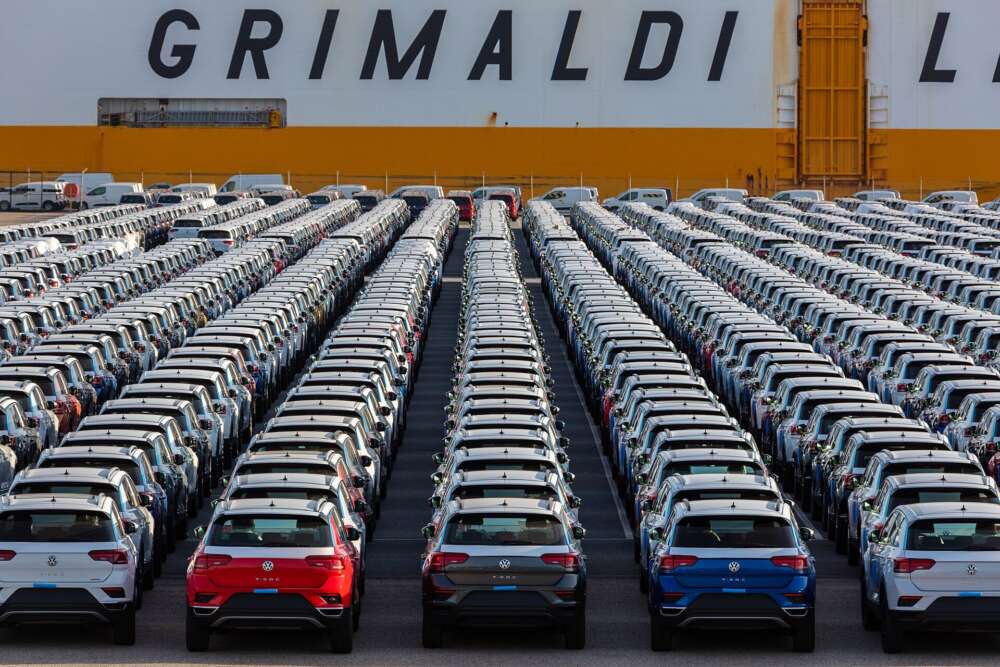
That matters more than ever, because at home, Chinese firms are barely making money. Overcapacity and relentless price wars have crushed margins. In the chemicals sector, profitability fell to just 4 percent in 2025, the lowest since 2002, while the share of loss-making firms hit 24 percent, the worst since 1999. The car industry tells a similar story. Before the EU imposed its tariffs, Chinese carmaker BYD earned close to 13,000 euros in profit per ‘Seal U’-model car sold in Europe and barely 1,300 euros on the same car at home. For a growing number of Chinese manufacturers, affluent foreign markets are no longer just an avenue for growth. They are the difference between profit and loss.
A sharp deterioration in access to the EU single market, especially if coupled with broader denial of access to the US market, would hit China’s export industries with a major demand shock, forcing output and exports to contract. The excess production would have nowhere to go but China’s already saturated home market, deepening the price collapse and worsening the glut. The country’s existing deflationary spiral would tighten, with firms cutting wages and shedding workers to defend margins, and households saving rather than spending.
The point is not that Europe should seek such an outcome. But this vulnerability explains why China wants to resolve economic tensions with Europe. China and the EU have just agreed on a new ministerial-level platform to discuss trade and investment rebalancing, export controls, intellectual property rights, and WTO reform. Procedural agreements, such as the one reached between Commissioner Maroš Šefčovič and Chinese Commerce Minister Wang Wentao in June 2026, are positive but not breakthroughs in themselves. Europe needs to become a credible geo-economic actor to resolve trade disputes with China through negotiation. Right now, Beijing does not think it has much to lose in Europe. Access to the European market, however, is a source of leverage. The question is whether Europe is willing to use it.
At the same time, Beijing has given Europe a playbook for dealing with Donald Trump. Trump first tried to hit China with massive tariffs, then backed down when Beijing retaliated. Similarly, the European threat to use the EU’s Anti-Coercion Instrument (ACI) over the Greenland row shows that Trump responds to pressure. How can the EU rapidly build leverage and deterrence against Beijing and Washington while upholding international law?
Quick Fix: Safeguards
The short-term answer is safeguards. A safeguard is a WTO-compliant emergency brake that the EU has rarely used. To legally invoke safeguards, the EU must show that a sudden and unforeseen surge in imports is seriously harming its producers. Safeguards then allow the EU to raise tariffs or cap import volumes – typically through tariff-rate quotas, where imports up to a set volume enter duty-free and anything above faces a steep duty. Quicker than the EU’s lengthy anti-dumping and anti-subsidy investigations, this can address entire sectors instead of proceeding product by product. Sectors and products that could be considered include machinery, fabricated aluminum products and chemicals.
The political wind is turning. On July 2, 2026, Germany called for “faster and sector-wide” anti-dumping and anti-subsidy measures at the European level, after having voted against the tariffs on Chinese electric vehicles as recently as 2024. The signal is welcome – the choice of instrument is not. Anti-dumping and anti-subsidy cases are built around narrowly defined products. Each requires painstaking, company-specific calculations of dumping and subsidy margins. This is precisely what makes them slow. Stretching them across whole sectors would invite years of litigation. Safeguards already deliver what Berlin is after: speed and sectoral breadth. The 2018 steel safeguard covered some two dozen product categories in a single investigation, with no margin calculations at all. Berlin has found the right instinct. Now it should embrace the right tool.
Safeguards are also more flexible than they first appear. Although global in scope, safeguards do not need to hit every trading partner equally. The EU can exempt its free trade partners if it can show that the remaining imports from all other countries alone cause serious injury. However, the EU must also tackle the risk that imports it wants to reduce get rerouted through third countries. Brussels also controls how much relief of the measures to grant and can therefore negotiate quotas and phase-outs, giving it leverage.
Safeguards only buy time – eight years at most, according to WTO law – and that time will be wasted unless European industry uses it to become competitive. If European industries don’t improve their competitiveness, safeguards will do no more than provide a temporary lifeline to industries that will die soon afterward. The economic relief safeguards provide for European industry should therefore come with strings attached: companies should use the time they are afforded to invest in research and innovation. At the same time, member states and the EU need to improve the conditions for competitiveness, for example through deregulation. To maintain pressure for reform, the EU should not renew the safeguards after the initial four-year period unless governments and firms deliver.
New Tools Will Not Answer Washington
Safeguards are the wrong instrument for dealing with Washington. They are designed to address sustained import surges, but the American challenge takes the form of sudden, coercive tariffs. Safeguards can help against Chinese overcapacity, but they leave the American challenge unanswered. Brussels is considering a new tool to match the sweeping powers that Sections 232 and 301 of US trade legislation give the US president. The problem with importing such American legislative inspiration is twofold.
First, while the US has promised to apply its domestic instruments in a WTO-compliant manner, in practice it does not abide by international law. Since Trump’s first term, the US has been using Section 301 without first having recourse to dispute settlement, which is a breach of WTO law. When challenged, the US appeals into the void. Since the US Supreme Court ruled that the International Emergency Economic Powers Act (IEEPA) does not authorize the president to impose tariffs, President Trump has relied on unilateral Sections 232 and 301 tariffs even more. The fact that the US does not care about international law – arguably the single most forceful feature of its tariff power – is precisely the element Europe must not adopt.
Second, importing US legal instruments will not actually provide the EU with more legal firepower. If one sets aside the instruments that both the US and the EU have at their disposal in near-identical form, safeguards, anti-dumping and anti-subsidy duties, then the comparison comes down to the two American statutes with a fearsome reputation: Sections 301 and 232. Their force, however, lies in how they are used, not in what they lawfully permit. Applied consistently with WTO rules, Section 301 could impose tariffs only after the US had won its case in Geneva – a power the EU already possesses under its Enforcement Regulation, which since 2021 even allows retaliation when an opponent wins time by appealing into the void. Applied consistently with WTO rules, Section 232 could restrict trade only in a genuine security emergency – something the EU equally does, as its sanctions against Russia show, and WTO panels have already ruled that economic overcapacity is no such emergency. Beyond this, the EU commands instruments Washington has no equivalent of: the Foreign Subsidies Regulation, the International Procurement Instrument and, most powerful of all, the Anti-Coercion Instrument.
On paper, the EU’s tools are forceful enough. What Europe lacks is not new instruments. Nor do the other ideas in circulation fare better. A “Plaza Accord 2.0” to force up the renminbi, as suggested by German Chancellor Friedrich Merz, assumes leverage Europe has not built, revives a 1985 bargain Beijing sees as the trap that sank Japan and misses the real issue: a party-state that can subsidize away any squeeze on its firms. A “diversification instrument,” proposed by Šefčovič, could be a useful supplement, though the devil is in the details. It would require at least three suppliers of critical components as a criterion for public procurement, subsidies or new due diligence and stress-testing requirements in critical sectors. But it would tackle a different problem: dependence on specific products or components, not overcapacity. It should therefore be deployed in a targeted manner.
Aside from Washington’s disregard for WTO law, the EU’s toolkit has two gaps:
- The activation gap: In Washington, the president pulls the trigger, and a tariff becomes reality within days. In Brussels, the same trigger is shared among 27 member states with diverging interests. Although the tools exist, neither Washington nor Beijing believes Europe has the political unity to use them.
- The discretion gap: US statutes give the executive branch enormous freedom, barely defining key terms such as ‘national security’ and giving it a free hand over whom to target, how hard, in what form, and for how long. European tools are the opposite. They are hemmed in by precise legal tests and procedural requirements. A US president can credibly offer to raise or lower a tariff as a bargaining chip. In part, this is because the law grants him broad discretion. But President Trump has repeatedly gone beyond even that generous mandate – most prominently when the Supreme Court struck down his sweeping tariffs for lacking any legal basis. Brussels, by contrast, is pinned to legal formulas that cannot be traded so freely.
The EU will not close either gap entirely. Rather than building a new tool, Brussels should reform existing ones to narrow both gaps.
Reform Existing Tools
The EU’s tools are too slow and burdened by red tape to be the credible threat Europe needs to defend itself against Washington and Beijing. Building an entirely new instrument would mean years of negotiation and legislation. The faster, albeit still complicated, route is to sharpen what already exists. Some of the reforms would require legislative action, others can be enacted much more easily. To narrow the activation gap, the EU could make four reforms.
1. Broaden Permanent Monitoring
Since 2024, the EC has automatically registered imports the moment a trade-defense investigation opens, and last year it added a task force to track volume surges and price falls across all sectors. The EU should go one step further and test whether surveillance under WTO-safeguard rules leaves room to backdate duties there too. The question is legally unsettled. Unlike anti-dumping law, safeguard law does not explicitly provide for retroactive collection and is currently debated among lawyers. Even posing the question changes the calculus of Europe’s trading partners.
2. Use Provisional Measures
In a similar vein, the EU should create and expand rapid provisional measures that allow it to impose a temporary duty as early as international law permits. The duties should be refunded if the investigation ultimately leads nowhere. Speed is itself a deterrent. Additionally, provisional measures would incentivize the EU to expedite its investigation because they have a maximum duration. Provisional anti-dumping duties can be introduced for four months (or six months if the EU applies the lesser duty rule). This would put pressure on EU investigators and would require member states to provide extra resources to speed up the process. Currently, the EC services implementing a series of the relevant measures are massively understaffed. Instead of demanding a reshuffling of resources that would take quite a while, the EU member states should act quickly and provide additional funding. After all, Europe needs to avoid a gap before the definitive duties take effect, as importers would use such a gap to stockpile imports they know are coming under duties soon after. This can hardly be achieved without increasing resources.
3. Reverse the Voting Rule
For anti-dumping and anti-subsidy (AD/AS) duties, the default already favors action. A measure proceeds unless a qualified majority of member states blocks it, which is how the tariffs on Chinese electric vehicles survived a split vote. But for the two instruments that matter most, the presumption is inverted. Definitive safeguard measures fall if member states split, and the Anti-Coercion Instrument cannot even be activated until a qualified majority in the Council of the EU agrees that coercion has occurred. Aligning these with the anti-dumping rule – action unless a qualified majority objects – would transform the EU’s credibility without expanding the European Commission’s substantive powers by one inch.
4. Build a Solidarity Mechanism
Many EU governments fear China or the US could target them in a countermove by singling out an exposed member state. The EU should implement the idea of a solidarity mechanism that shares the costs of retaliation so that no one country can be targeted alone. More concretely, the EU could provide financial compensation to companies suffering from retaliation. The mere knowledge that the EU would close ranks would itself deter coercion.
Three measures could also narrow the above-mentioned discretion gap.
1. Implement Behavior-Dependent Tools Conduct-Keyed Dials
Measures should be designed not as on-off switches but as dials that ease automatically as the other side’s behavior improves. As overcapacity falls, subsidies are withdrawn, prices recover or markets open. This could strengthen the EU’s hand in bilateral negotiations, allowing it to make realistic demands in return for a partial relaxation of trade measures. Tellingly, the EU’s newer tools, notably the Anti-Coercion Instrument, already broadly work this way. The EU could review all its tools and, where WTO law permits, redesign them accordingly.
2. Scale Back ‘WTO-Plus’ Features
European trade law voluntarily ties its own hands in ways the WTO does not require. The first is the ‘lesser duty rule,’ under which the EU caps tariffs below the level permitted by WTO rules. Because the EU usually operates under the legal ceiling, it has room to hit harder simply by loosening its own restraints and raising duties that reach the legal maximum. The EU has already granted itself some of this room. Since 2018, the EU has allowed itself a first exception. If a foreign state artificially cheapens a key input – for instance, through export restrictions or subsidized energy – and that input accounts for at least 17 percent of a product’s production cost, the EU may drop the cap and impose duties up to the full legal ceiling. But it could make use of this option more systematically.
The second is the ‘Union interest test,’ which assesses whether a measure would hurt European importers and consumers more than it benefits producers. This provision makes sense. But the EU should follow through on its December 2025 economic security agenda by rewriting this test so that economic security counts as a value worth defending and then applying it consistently. So far, this new reading of the test has been applied once.
3. Build in Automatic Escalation
When the EU activates a tool, the EC should already have the authority to respond to any counter-retaliation without returning to the Council of the EU for a fresh decision each time. This could be done by reinterpreting the Anti-Coercion Instrument to define counter-retaliation as a case of economic coercion. Coupled with the voting-rule reform above, a qualified majority could still stop the EC, but it would no longer need one to act. An adversary weighing whether to hit back needs to know that the response will be swift and automatic, not subject to another round of 27-way haggling.
A Portfolio, Not a Silver Bullet
Europe needs several measures to address external economic pressure in a country-agnostic way. It can and should also deploy several measures at once, as a “swarm.” In the short term, safeguards in particular offer fast, lawful protection against Chinese overcapacity. But reforming existing tools is necessary to defend the EU both against China and the US. Europe’s problem was never a shortage of weapons. It is time to use them before deindustrialization becomes irreversible.