Silence Is Not Neutral
International Actors and Urban Protests in Kenya and Senegal
In the twenty-first century, Africa has emerged as a global epicenter of protest movements. Many of these movements are concentrated in rapidly expanding urban areas, where high population density heightens competition over resources. The same conditions also facilitate the mobilization of protesters. In this context, protests have become a key channel for making political demands.
This trend presents a strategic dilemma for international actors. On the one hand, they have an interest in supporting democratic participation and vibrant civil societies – after all, democratic and inclusive politics make for more stable and reliable partners. On the other hand, however, visible engagement in protest movements can undermine local dynamics or strain relations with partner governments. Meanwhile, democratic governments under pressure are increasingly restricting freedoms, imposing crackdowns on protest leaders and fueling anti-imperialist narratives against foreign actors. Even where international and protestors’ interests overlap, these tensions complicate meaningful external support.
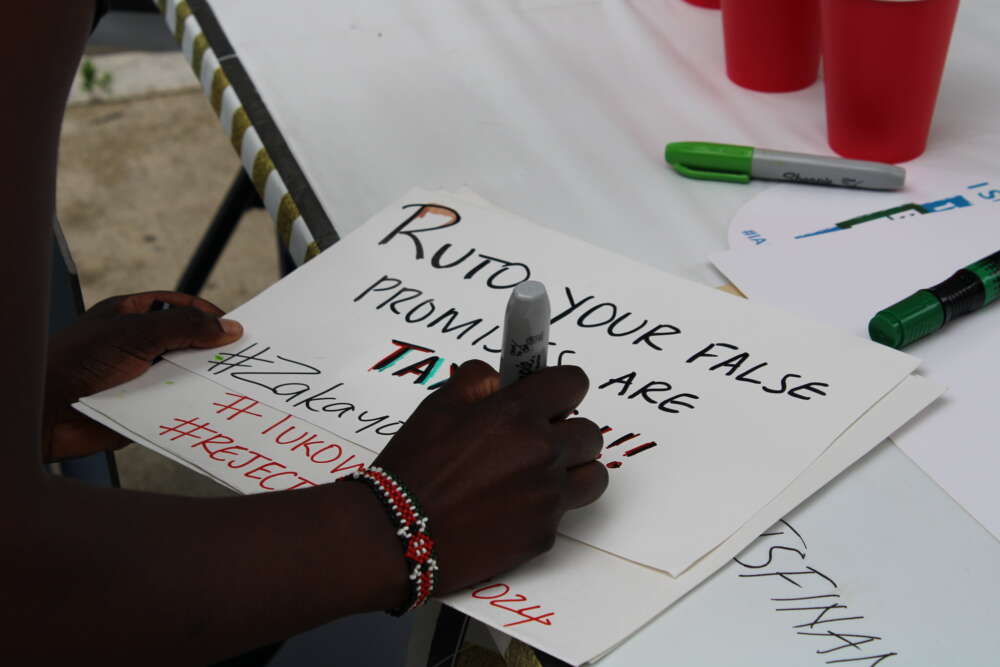
This study examines two major 2024 protest waves: (1) the Finance Bill protests in Kenya and (2) the electoral crisis protests in Senegal. It analyzes how these protests unfolded, who mobilized and how both protesters and the government viewed international engagement. Building on this analysis, the study also develops recommendations for how international actors can respond to protest movements without increasing risks to protestors or jeopardizing their partnerships.
What We Found
- Broad, inclusive mobilization is a key part of successful protest movements.
- Protest mobilization reflects generational and organizational shifts.
- Digital spaces matter, but how much depends on citizens’ access to offline networks.
- ‘Spontaneous’ movements are built on prior experiences and already-existing networks – many of which were previously supported by donors.
- Diplomatic signals (like condemning violent protest) shape the perceived credibility of international actors – and often diverge from protestors’ expectations.
- International donor support can be risky, but it is of crucial importance, especially before and after protest cycles.
What We Recommend
- Private foundations and International Non-Governmental Organizations (INGOs) should provide rapid support during the peak of protest movements and should prepare for mis- and disinformation risks.
- External actors should use international fora to amplify local voices, deter repression and strengthen democratic rights.
- Foreign governments and multilateral bodies should balance public pressure with backdoor diplomacy against repression (based on context).
- Donors should strengthen civic infrastructure as a long-term investment.
- Donors should prioritize partners based on legitimacy, mobilization experience and their openness to international support.
Read the full study and policy brief to learn more.
This report was originally published by the Friedrich-Ebert-Stiftung, which generously supported and funded this study.