Germany’s China Shock
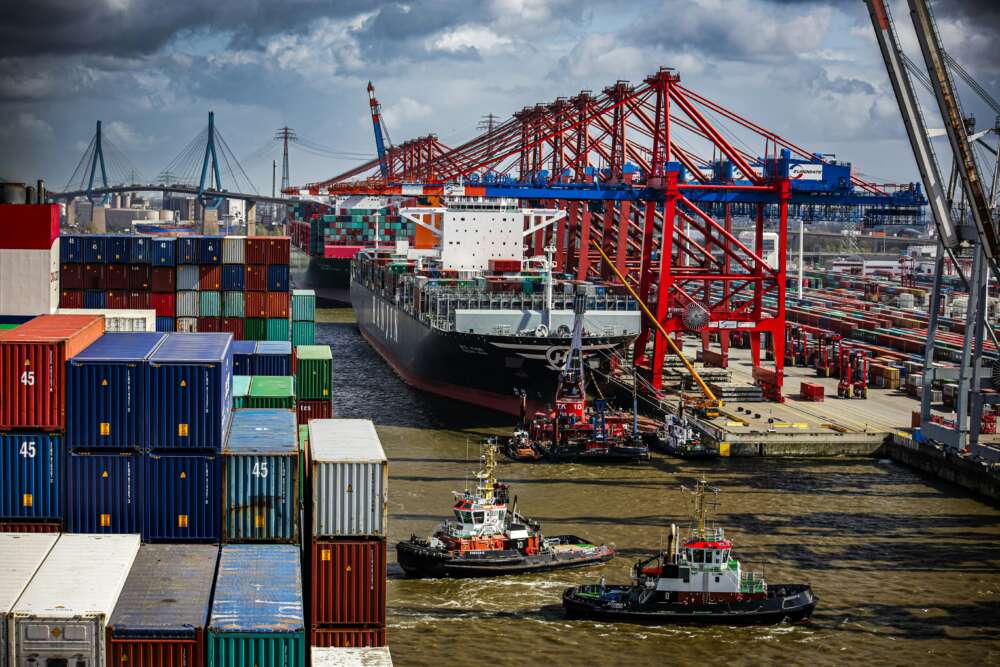
“The China shock is here,” the German Economic Institute declared last year. Indeed, 2025 will go down as the year in which it could no longer be denied. Germany’s trade deficit with China reached a record level of €87 billion — an increase of €20 billion compared to the previous year. And German exports to China continue to be in free fall. The United States, France, the Netherlands, Poland, and Italy have by now become more important export markets for Germany than China.
At the beginning of this century, China accounted for 6 percent of global industrial production. Today, the figure stands at around 30 percent. China’s economic model is firmly geared toward global dominance in industries where Germany has been traditionally strong, such as automotive, mechanical engineering, and chemicals — as well as in future industries such as robotics and biotechnology. Beijing not only leverages the economies of scale of its vast domestic market and makes forward-looking investments in research and development. It also exploits the full range of instruments offered by authoritarian state capitalism to grant its companies competitive advantages, abusing its membership of the World Trade Organization.
China aims to produce all relevant industrial and high-tech goods itself. After a trip to China last fall, Robin Harding, the Asia editor of the Financial Times, concluded: “There is nothing that China wants to import, nothing it does not believe it can make better and cheaper, nothing for which it wants to rely on foreigners a single day longer than it has to.” Due to weak domestic demand, Beijing is pushing ever larger volumes of goods onto the global market at cutthroat prices supported by an artificially undervalued currency. In 2025, China recorded a global trade surplus of $1.2 trillion. The development in the automotive sector is particularly breathtaking. China’s exports have risen exponentially — from fewer than one million vehicles in 2020 to seven million in 2025.
Dramatic Consequences
The consequences for German and European industry are dramatic. German companies in China have strongly localized their production and import ever fewer goods or intermediate products from Europe for sale on the Chinese market — with the automotive sector leading the way. This has not prevented their market share in China from rapidly declining. At the same time, Chinese companies are systematically displacing German competitors in third markets.
Without countermeasures, this threatens to happen in the European market as well. On the German market alone — for example in mechanical engineering — Chinese imports are increasing massively. Price advantages of up to 30 percent are putting German firms under intense competitive pressure, driven by lower production costs, state subsidies, and targeted exchange rate management by Beijing. For the first time, Germany has fallen into an overall deficit with China in the key sector of capital goods.
In consequence, Germany is facing the threat of massive deindustrialization with severe social and political upheaval. Since 2019, Germany has lost well over 200,000 well-paid industrial jobs. Hundreds of thousands more are at risk. Municipal corporate tax revenues, particularly in industrial hubs in southern Germany, are collapsing. Slowly, it is becoming clear what is at stake. “If we get this wrong, we risk the fate of Detroit,” warned Manuel Hagel, the center-right Christian Democrats’ (CDU) candidate for prime minister in the federal state of Baden-Württemberg, in a recent interview.
In addition, Germany finds itself in a “China trap” of dependencies in critical raw materials, supply chains, and critical infrastructure, such as 5G networks or inverters in power grids. In critical raw materials, the situation is particularly dire. China dominates the global market: A 91-percent share of rare earth processing speaks volumes. Even in extraction, China still accounts for around 60 percent. Strategically significant not least for Europe’s defense sector, heavy rare earths are mined almost exclusively in China, Myanmar, and Laos.
Beijing has become a grand master at weaponizing dependencies — learning from the United States. In October 2025, the Chinese leadership announced a tightened export control regime. Under the new rules, any foreign company must apply for a license not only to import critical raw materials but also to resell any goods in which rare earths account for as little as 0.1 percent of the product’s value. Beijing also announced that no licenses would be issued for the defense industry. As a “responsible major power,” it had introduced the new control regime “to better safeguard world peace and regional stability.” A researcher at the party-state-run Chinese Academy of Social Sciences proudly noted that China was transforming itself from a “supplier” into a “governor of the rare earth order.”
Frontal Attack
Europeans should see this as the frontal attack that it is. President Xi Jinping’s China is the key enabler of Russia’s military-industrial complex, and it is announcing nothing less than an attempt to pull the rug from under the Europeans’ efforts to rebuild their armed forces. With its control regime, Beijing can also paralyze production in key industrial sectors. Detailed applications for export licenses force German companies to disclose business secrets while they are also designed to prevent the stockpiling of reserves. The message to German companies is clear: Produce in China or cooperate with Chinese firms. And the message to the German and other European governments is equally clear: Do not consider further restrictions on China’s access to high technology — rather, roll back existing controls. And don’t even think about closing the European market to the flood of Chinese goods.
Beijing’s control regime is far more than retaliation for US export restrictions. Washington’s controls target specific high-tech segments, with limited effects so far on overall industrial production. Beijing’s approach, by contrast, aims at control over the entire industrial production chain. The fact that Beijing has paused the tightened export regime for one year following negotiations with the United States offers no relief for Germany and Europe. The end of the suspension is looming fast. And the currently applicable provisions have already led to production bottlenecks.
Germany received a reminder of the severity of supply chain dependencies last fall during the Nexperia crisis. After the Dutch government took action against the Chinese owner of the chip manufacturer, the Chinese government halted exports of semiconductors that, although largely produced in Europe, were sent to China for final assembly and packaging. China’s action against a single manufacturer shut down production lines in Germany because, for example, suppliers to automotive manufacturers had neither maintained sufficient inventories nor been able to quickly switch to alternative suppliers. Further industrial hollowing-out would dramatically increase dependencies on China.
Even without deliberate weaponization supply chain dependencies can pose severe risks, as the COVID-19 pandemic demonstrated. German and European supply chains are in no way prepared for scenarios such as a Chinese blockade of Taiwan or even a possible war.
A Shock Long in the Making
In many ways, “China shock” is a misnomer. It is not a discrete event with a one-time effect but a long-term, lasting phenomenon with sustained and accelerating impact. Most of all, it did not arrive suddenly but has been more than a decade in the making. Over the past 15 years, Germany has recklessly maneuvered itself into a position of weakness and vulnerability to blackmail vis-à-vis Beijing’s authoritarian state capitalism. This represents a collective failure of German elites. The reasons include arrogance and self-delusion, as well as flawed incentive structures and short-term profit interests. The cognitive failure at the heart of the present predicament is all the more striking given that China has almost always clearly communicated its intentions — in planning documents, speeches, and actions.
As early as 2010, the Chinese government weaponized rare earth dependencies against Japan to extract concessions on foreign policy. In a speech in April 2020, Xi made it very clear that China sought independence from foreign countries in all security-relevant sectors. At the same time, it must “increase the dependence of international production chains on China.” The “Made in China 2025” strategy, published in 2015, detailed the master plan for becoming the dominant industrial power. The leading China-focused think tank MERICS described it at the time as a “declaration of war on Germany.” A comprehensive MERICS study made clear that the core of German industry would be threatened by China’s ambitions.
Yet the majority of elites in business and politics did not take the danger seriously. One reason was complacency. “China can at best copy. We will always have an innovation lead,” was the widespread conviction. The experience of the past eight decades — during which German industry had always successfully held its own in global competition — also ran deep. Why should China be any different from Japan or South Korea?, argued then Chancellor Olaf Scholz of the center-left Social Democrats (SPD) in 2023. He conveniently ignored the example of the German solar industry, whose business largely migrated to China in the 2010s.
In the private sector, incentive structures for managers played a central role. Board members of German blue-chip companies operate with a short time horizon. Even those who recognized the risks often chose short-term profits in the Chinese market, as long as they were still flowing, rather than advocating for a strategic shift.
The German automotive industry still pretends today that it can continue to rely on completely open markets vis-à-vis China. The short-term concern about exporting the last luxury gasoline cars to China, as well as the interest in importing electric vehicles produced in their own Chinese plants, is too great. It is no coincidence that family-owned business leaders, rather than executives of listed companies, were among the first to sound the alarm and to secure the necessary political backing within the BDI, Germany’s industry lobby, for the groundbreaking 2019 position paper describing China as a “systemic competitor.”
The incentives to focus on cost efficiency without resilience continue to prevent investments aimed at reducing dependencies. The entire West has willingly outsourced the dirty, low-margin business of rare earths and critical raw materials to China. Even after the Nexperia shock last autumn, BMW’s head of procurement concluded that it would be wise to source more semiconductors from China, after all, China produces cheaply in ever greater quantities.
Moreover, fear of retaliatory measures against German companies operating in China long prevented Germany from protecting critical infrastructure such as the 5G mobile network from dependencies on Chinese providers such as Huawei.
A Serious Warning
Perhaps the decisive aspect in dealing with the China shock is cognitive. First, it is about grasping the scale of the upheaval and the depth of dependencies. As economic historian Adam Tooze put it, the industrial history of the West is merely a “preface” to the industrial history of China. The history of modernity, Tooze posits, will now be Sino-centric: “This is the material dethroning of the West as the central driver of world history. This is really what the provincialization of the West looks like.”
This is a serious warning. The crucial question is what conclusions Germany and Europe will now draw from it and whether they will succeed in further developing their economic model for this new era. In this context it is crucially important to beware of two flawed schools of thought.
The first is defeatism: Europe can do nothing against China’s industrial might. In a world where the United States under President Donald Trump is becoming Europe’s adversary, the Europeans should quietly adapt to a Sino-centric order and be content with the crumbs from the table. In one variant of this worldview, good relations with China cushion EU-US tensions — as if the world’s largest net exporter could compensate for a collapsing transatlantic trade surplus. In another variant, this stance is normatively embellished: China’s dominance in green technologies is the best path to tackling the climate catastrophe. Economist Isabella Weber argues it is a “chance” for Europe to accept its own “peripheralization.” Self-abandonment has never felt so virtuous.
The second school of thought argues that Germany and Europe simply need to become more competitive — through more innovation, reducing excessive regulation in the European single market, and lowering energy and labor costs. All of this is correct. Germany in particular needs to decisively reduce bureaucracy and update its operating model not just in the public but also the private sector; this applies not least to its established industrial champions. There is no excuse for Germany and Europe to not move aggressively to cut red tape, end the economic fragmentation within the European Union, bring down energy costs, and attract global talent. It also makes sense for the EU to pursue agreements globally to diversify trade and rapidly implement the agreements concluded with India and Latin America.
But it is dangerous to call unconditionally for “open markets” as the unreconstructed pillars of German ordo-liberal thinking, such as Veronika Grimm, a member of the German Council of Economic Experts, have. It is also dishonest for German Chancellor Friedrich Merz (CDU), who succeeded Scholz last year, to profess: “We do not believe in tariffs and protectionism but in free trade,” as he did in his recent article in Foreign Affairs.
That line was squarely directed at US President Donald Trump. Now, it is easy to dismiss Trump’s messy tariff excesses and make it clear that Trump’s tariff mania is not the approach of the German government. At the same time, Merz should realize that part of the US move toward protectionism (as spearheaded by Robert Lighthizer and Jamieson Greer who both served as US Trade Representatives under Trump) is a reaction to the first China shock that obliterated much of US heavy industry in the 2000s and 2010s.
As the devastating effects of the second China shock for German industry become clearer, it will become apparent that the German commitment to free trade is only skin deep. It only holds where it guarantees a trade surplus and underwrites German jobs. Merz himself acknowledged as much in November 2025 after a summit on the fate of the German steel industry. The chancellor then supported a preference for German and European steel in public procurement. He acknowledged that this runs counter to what Germany advocated “in previous times with open markets, fair competition, and without tariffs,” and continued, “Sadly, these times are over and this is why we need to protect our markets and this is why we need to protect our producers.”
Therefore, it should be clear that instead of a one-dimensional understanding of competitiveness of the ordo-liberal, Germany and Europe need to strive for Systemwettbewerbsfähigkeit: a new model of systemic competitiveness that resolutely strengthens Germany’s prosperity and security in the competition of systems. However much you dislike the world Germany is forced to operate in: ”Ordo-liberalism in one country” is not a winning formula in today’s new era of state interventionism.
A new model of systemic competitiveness needs to include measures to radically reduce dependencies in supply chains and protect core industries, alongside investments in new strengths. The irony is that China’s authoritarian state capitalism forces Germany and the EU to engage in state intervention to free themselves from Beijing’s grip.
At the same time, the new model is not about autarky. The EU can best build its own market power through global cooperation with like-minded partners like Japan, South Korea, Australia, Brazil, Canada, and other middle powers. That is why a blanket “Buy European” approach is counterproductive. Rather, the Europeans should pursue reciprocal arrangements with like-minded partners where possible. It is also a fallacy to believe that encouraging Chinese investment in Europe through joint ventures in areas where China has a technological lead (such as in batteries) is a magic solution. Just because European companies have allowed their technology to be transferred to Chinese competitors does not mean that Beijing will allow the same to happen. When it comes to batteries, for example, Germany and other European countries should prioritize cooperating with South Korean and Japanese companies.
In industrial policy, the goal must not be to preserve traditional industries at any cost, but to selectively strengthen those that promise future value creation, productivity growth, and resilience gains. There is no “one size fits all” approach, also given the very different vulnerabilities and ability to adapt (e.g., through specialization) depending on the industry in question. In some areas, such as solar panels, import dependence on China may be acceptable overall, provided security concerns regarding critical components are addressed. However, decarbonization cannot come at the price of European self-abandonment. Without a credible perspective of creating new value and sustainable jobs in Europe, climate protection will continue to lose political support.
A European Approach
In all of this, Berlin needs to take a decidedly European, not a narrow-minded German approach. This is essential not least because the costs of the China shock as well as possible Chinese coercion are distributed unevenly across the EU. A united European front is only possible if the most important European country takes a European approach.
One thing German and European decision-makers should not forget: The Chinese model has significant structural weaknesses and depends on solvent buyers for its vast export surpluses. This means both leverage and the certainty that Beijing will fiercely resist a more assertive European approach to subsidies and currency manipulation. For more than a decade, Xi has been hardening his system for confrontation with the West. German and European resilience vis-à-vis Xi (and Trump) will succeed only if we harden ourselves as well.
Therefore, the Europeans need to better understand their dependencies, decisively reducing key vulnerabilities, knowing their leverage — and having the determination, together as Europeans, to use it against coercive measures. The new German National Security Council must also be an Economic and Technology Security Council. The Minister of Economic Affairs must be a Minister for Economic Security. Instead of nostalgia for ordo-liberal thinking that underwrote the Wirtschaftswunder years, decisive investments in economic statecraft are required. And in all of this, the Europeans must rediscover their appetite for shaping the future. In this respect, they can certainly learn from China.
This article was first published in Internationale Politik Quarterly on February 23, 2026.