Drones Are Not the Real Enemy, Poor Legal Frameworks Are
Global Governance Futures 2025 Interviews Conrad Hässler
This interview was conducted by Mirko Hohmann and Joel Sandhu for the Global Governance Futures 2025 program which brings together young professionals to look ahead and recommend ways to address global challenges.
MH & JS: Recently, there has been a substantial debate in the German policy scene as to whether Germany should acquire drones. What is your view?
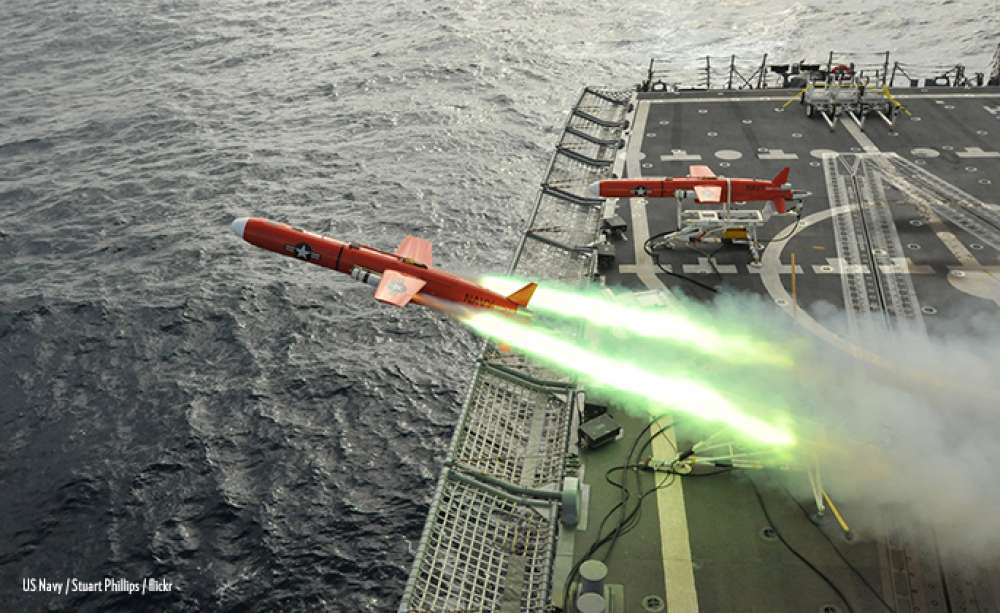
CH: It is a well-established tradition in German politics for the parties forming the government coalition to negotiate a document that will serve as a political roadmap for the upcoming four-year term. The 2013 coalition agreement, signed by the parties currently forming the German federal government, mentions Unmanned Aerial Systems (UAS) as a necessary capability for the Bundeswehr (German Armed Forces). Indeed, the Bundeswehr already uses UAS in Afghanistan for intelligence, surveillance, reconnaissance (ISR) purposes and for the protection of its own and allied forces. The agreement expresses the commitment to the development of a European UAS capability in close cooperation with European partners. At the same time, the German government has made clear that it opposes fully autonomous weapon systems that would exclude any human control and intervention while operating such systems.
I personally consider UAS – armed and unarmed – to be a technology of the future that will have a crucial impact on civil and military aviation in the decades to come. Germany can neither afford to ignore this development, nor should it refrain from acquiring such capabilities. Apart from apparent advantages in the military domain, the development of a European UAS capability could also lead to technological spillover effects in the civilian sector, thus entailing new business opportunities. The development of a European capability, rather than a national one, is, to my belief, the only possible way to proceed if results are to be produced within an acceptable timeframe and at manageable expenditures.
To read the full interview, please visit Global Policy online.