Hugo Slim on the Need for Ecological Humanitarianism
Interview Series: Aid, Rebuilt
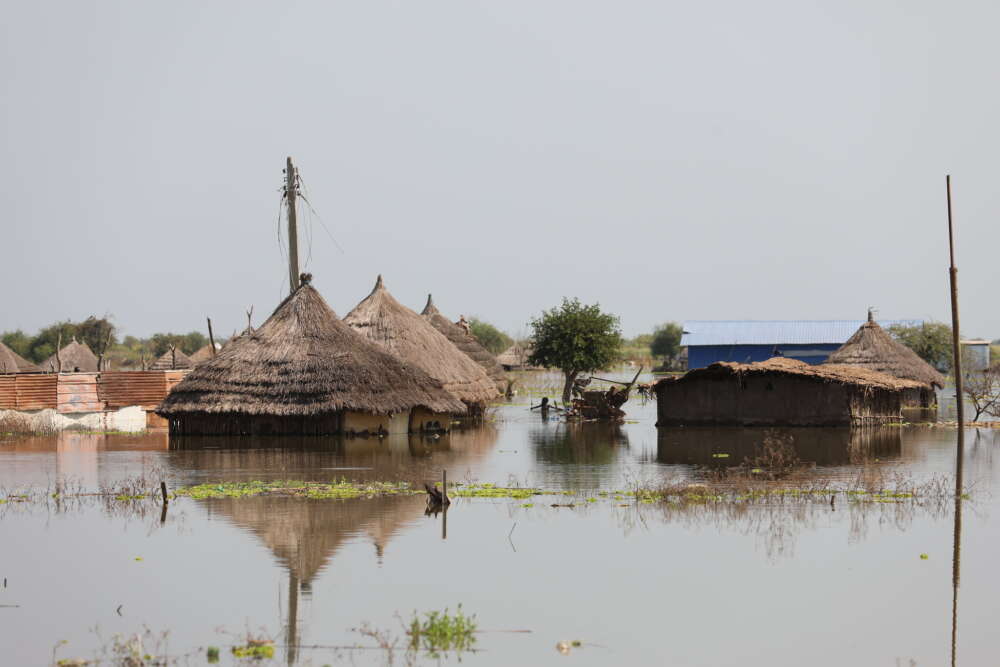
This interview is part of a larger conversation series with leading humanitarian thinkers on how to reshape and reform the aid system in turbulent times. This month, we’re talking to Hugo Slim, Director of the Las Casas Institute for Social Justice (University of Oxford), on the need for ecological humanitarianism.
If you could rebuild the aid system, what is the one main thing you would change?
I’d change the system’s fundamental purpose – its goal should always be to save people and nature together, given the all-life earth emergency we find ourselves in in the twenty-first century.
Why does saving people and nature belong together – how does one affect the other in humanitarian crises?
Humans cannot live without other life around us. As heat, droughts, floods, winds, and landslides increase globally because of climate change, the aquifers, rivers, fields, crops, animals, trees, plants, and ecosystems that people rely on in emergency settings for food, water, and shelter material will change and suffer too.
Many humanitarians know that whenever you ask people how they are – in rural areas or cities – they usually turn and point to the landscape around them to describe their needs in terms of nature: cultivable land, animal health, water supply, pollution, sanitation, food supply, and energy from wood, hydro, gas, or solar. All this is nature.
Unless nature is safe, thriving, productive and available, no job or cash grant can give people access to the means of survival. Humanitarians know that nature is central to human survival and vice versa.
Concretely, what could humanitarians do differently in an emergency (say, in a drought-driven famine)?
Humanitarians must merge human and nature organizations together; this should be at the heart of the humanitarian reset and UN reform. We need new mandates and new organizations for the earth emergency of the twenty-first century that explicitly commit to saving humans and nature in one single purpose, and mix ecologists and humanitarians in their teams. These new organizations should move beyond the current humanitarian fixation with ‘people in need’ and take a landscape approach to the suffering of humans and nature together in ‘places in need.’
This means doing all-life needs assessments across a given landscape and designing an all-life response that prioritizes all-life resilience for mutual survival. The International Federation of Red Cross and Red Crescent Societies (IFRC) and World Wildlife Fund (WWF) have started doing this together in several pilot landscapes. In Somalia, the Building Resilient Communities in Somalia (BRCiS) Consortium is doing the same thing. When I first worked in the humanitarian sector in the 1980s, the World Food Programme always combined human and nature work in emergencies.
The horrific destruction of so many people in World War II rightly produced a deeply “humanist humanitarianism” in the decades that followed. The earth emergency of the twenty-first century requires us to develop an “ecological humanitarianism” that is right for this time – a time when nature and the earth as we need it is being destroyed and dangerously transformed. In the climate emergency, nature is our neighbor, too. We need to save it, just as we need to save ourselves. This is Humanitarianism 2.0.
Why are humanitarians well-placed to do this?
Humanitarians are deeply entrepreneurial and always have been – until they got a little entrenched in their bureaucracies in the sector’s recent boom years. Since inventing humanist humanitarianism in the nineteenth century, humanitarians have continuously brought more and more peripheral groups of human life into the mainstream of compassion and politics: slaves, factory workers, women, wounded soldiers, prisoners of war, refugees, children, civilians, and pets and livestock.
The new generation of humanitarians now must look around at the climate emergency and ask: How can we save humans and nature together? As always, new purposes and models of organizations will be innovated by good, pioneering people with fresh ideas. These organizations will work with the world as it is today, pioneering ecological humanitarian programming that re-purposes and re-norms humanitarianism for the twenty-first century.
What would updating the humanitarian principles entail?
I think we need to rewrite our first two humanitarian principles for the twenty-first century, so that they properly reflect the reality of the mutual survival of humanity and nature, and human life and society’s dependence on nature. This will give ecological humanitarians the new all-life purpose they need, recognizing that we do not just live as part of an “international community of human states” but as part of a much wider “earth community.”
Here is one new definition of the principle of ‘humanity’: “To alleviate suffering wherever it may be found in the earth community by protecting human life, dignity and health, ensuring respect for the natural environment, and supporting the vital mutualism between humanity and nature.”
Here is a new version of the principle of ‘impartiality’: “Respond fairly to the urgent needs, vulnerabilities and risks of human beings and other members of the earth community by relieving their suffering and distress, and protecting their shared environments from current and future damage.”
For those who would like to engage more deeply with your “one thing,” what reading would you recommend?
In my book “Humanitarianism 2.0: New Ethics for the Climate Emergency,” I offer various new versions of the core humanitarian principles and flesh out my idea in greater detail. (Find Hugo’s new book here: Humanitarianism 2.0 | Hurst Publishers)