Nimo Hassan on Equitable Partnerships
Interview Series: Aid, Rebuilt
This interview is part of a larger conversation series with leading humanitarian thinkers on how to reshape and reform the aid system in turbulent times. This month, we’re talking to Nimo Hassan, director of the Somalia NGO Consortium (SNC).
If you could rebuild the aid system, what is the one main thing you would change?
If I could rebuild the aid system, the one thing I would change is how partnerships are designed between international humanitarian actors and their national and local partners. I would move away from transactional models toward partnerships that are truly equitable and rooted in trust. Too often, the current system is top-down, with power, funding and decision-making concentrated at the top, while the communities and local organizations closest to the ground have the least influence. This imbalance limits both trust and long-term impact.
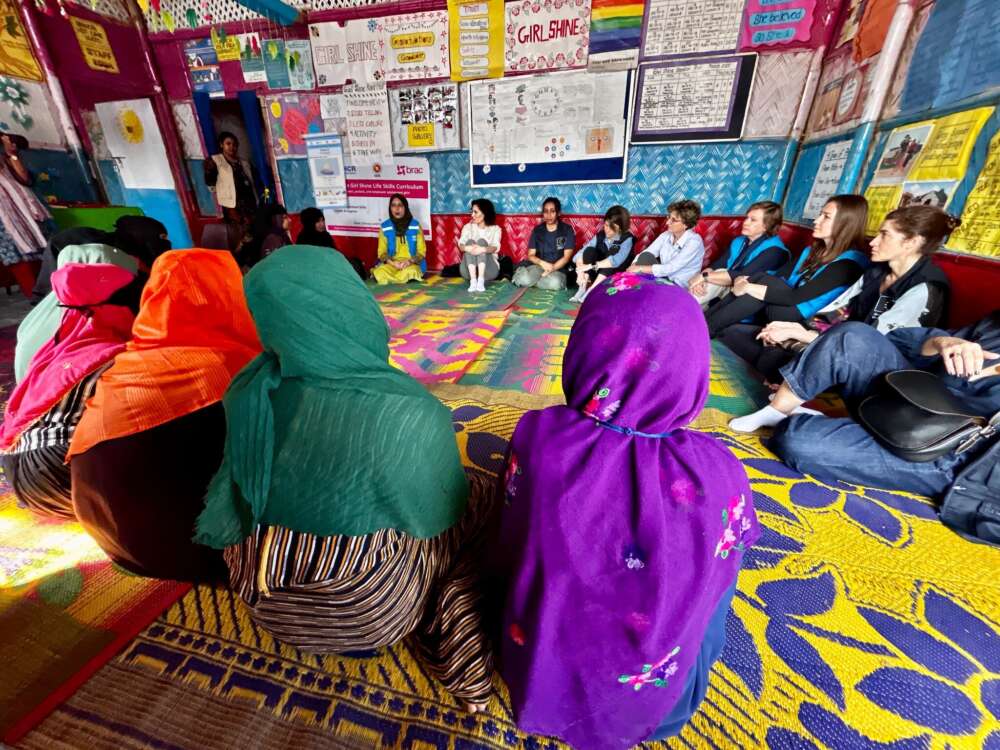
Rebuilding partnerships means putting communities at the heart of the system. Local actors should not only implement projects but also shape their priorities, define solutions and take final decisions. Many already possess the relevant knowledge and resilience – what they lack is equal access to power and resources. The diversity and range of local actors should also be acknowledged, as they are too often described as a homogeneous group with the same, size, areas of expertise, challenges, and capacities. Let’s stop painting them all with the same brush. Moving to more genuine, equitable partnerships would shift resources closer to communities, reduce unnecessary hierarchies and build relationships based on mutual respect rather than dependency or compliance. This shift would also transform funding. More balanced power dynamics would lead to flexible financial instruments that respond to real community needs rather than rigid external priorities. Ultimately, changing the partnership model creates a system where impact is driven by those who best understand the solutions.
The importance of localization and equal partnerships has been debated for years in conference halls, documented in academic research and highlighted in evaluation and donor reports. Despite these extensive conversations and commitments, meaningful change has yet to fully materialize in practice.
Can you give us a specific moment in Somalia where genuine local leadership led to greater impact and what that same intervention would have looked like run through the current top-down structure?
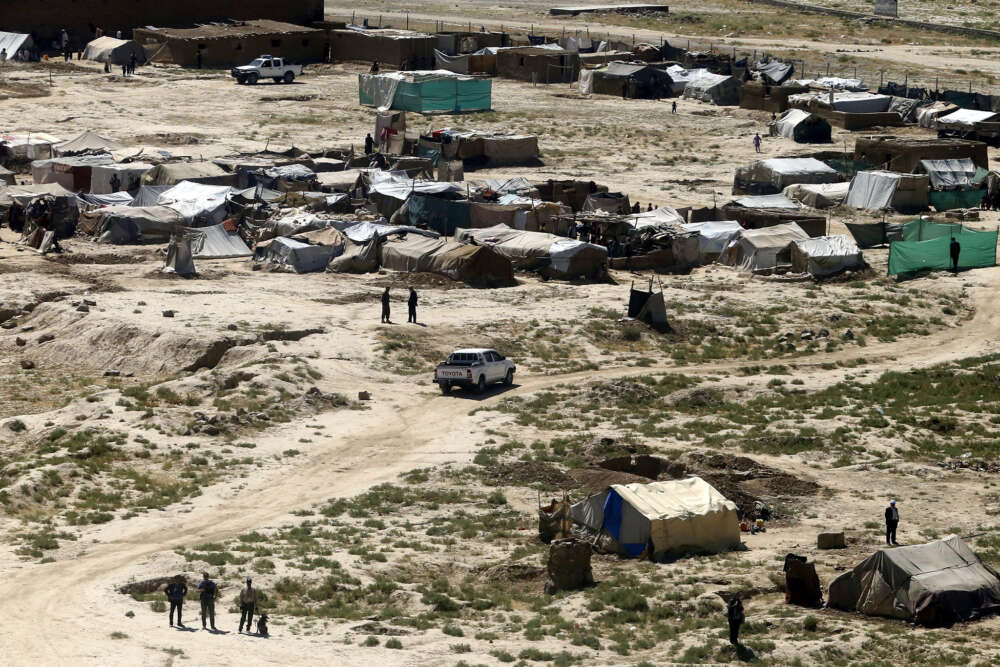
In Somalia, you cannot really talk about humanitarian response as something external. Humanitarian crises and the consequent humanitarian responses have been going on for decades: droughts that come and go, floods that wipe out what little has just recovered, conflicts that shift rather than end, and access that is never guaranteed. In all these years, it was never the international system that carried the bulk of the humanitarian response in the hardest-hit places, but rather the national Non-Governmental Organizations (NGOs), local organizations, community structures, and most of all, the people who are already there when things go wrong.
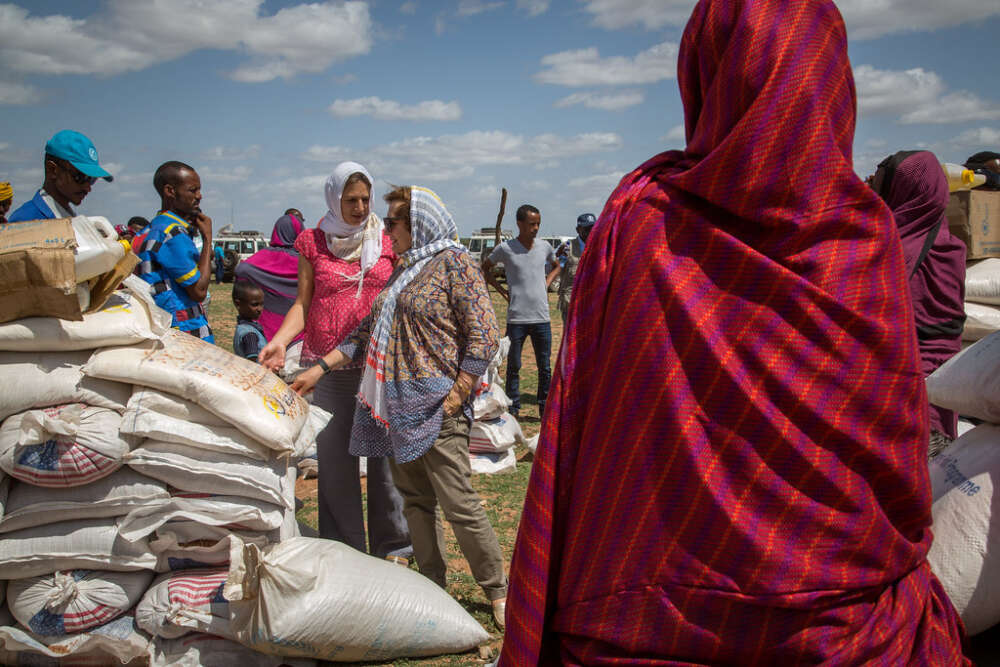
A powerful example of local leadership comes from the 2017 drought response, particularly in Galmudug and Southwest State. During the crisis, local NGOs, community elders, women’s groups, and district authorities played a central role in identifying the households most in need and deciding what type of assistance would be most useful. At the beginning of the response, international agencies proposed standard targeting criteria to determine who should receive support – as tends to be procedure. However, local leaders challenged some of these assumptions. They knew that many families who appeared relatively stable on paper had, in reality, lost much of their livestock and were also supporting relatives and displaced families. Through community verification, they were able to identify vulnerable households that might otherwise have been overlooked. They also made practical adjustments to where and when assistance was delivered, helping to reduce tensions and improve access for different groups within the community. The outcome was not perfect, but assistance reached people more quickly and with a high level of community acceptance. Because local actors understood the social dynamics and realities on the ground, they were able to respond in ways that external organizations alone would have struggled to achieve.
If the same response had been managed through a more conventional top-down approach, many of these decisions would likely have been made outside the control of the affected communities. Local organizations may have been involved in implementation, but with significantly less influence over how assistance was targeted and delivered. Aid would still have reached people, but the response may have been slower to adapt and less effective at identifying those facing the greatest need.
Examples like this show why localization is about more than merely ‘shifting responsibilities for delivery.’ The real value of local leadership lies in shaping decisions. Local actors bring knowledge of community relationships, vulnerabilities and priorities that cannot easily be captured through external assessments alone. When that knowledge is reflected in decision-making, humanitarian responses are often more relevant, trusted and effective.
You’ve watched the debate around localization for years without it translating into practice. In the case of Somalia, what are two or three actual mechanisms that would move the needle?
We have been talking about localization for years now. At this point, everyone agrees on it in principle. The problems start after the meeting ends. In Somalia, local NGOs are not waiting outside the system asking to be included; they are already doing most of the work in places others cannot reach. That is just reality. But when you follow the money and the decisions, local NGOs are still not part of the picture in any meaningful way. The root issue is simple, even if it is uncomfortable to say: the system is not ready to let go of control. The following three things would actually change that.
First, direct, predictable funding models rather than short-term, project-based cycles that hinder organizational stability. Right now, local and national organizations are still seen as “too risky,” which keeps them stuck in smaller projects and loops of short-term funding. In practice, this means local actors are left with little room to make decisions when things change on the ground. They have to keep going back to international partners for approvals, and that slows everything down. In the end, it adds layers of bureaucracy and delays support to people who are already waiting too long. If organizations have been operating for years under full donor-compliance systems, then at some point, the humanitarian system should stop asking whether they can manage the funds and start asking why they are still not trusted to do so directly and at scale. Establishing long-term funding structures is essential for sustainable impact and institutional growth.
Pooled funds – the financial mechanisms where multiple donors contribute to a common pot that local actors access – can make a difference in this regard. In Somalia, the Somalia Humanitarian Fund (SHF) has shown that in 2025, 77 percent of SHF funding went directly to local NGOs but it made up less than 6 percent of overall humanitarian funding to Somalia. But let’s be honest: most of the system still sits outside that model. And even pooled funds are still filtered through international structures. So, this represents progress, but not overall system transformation.
For actual impact, we need greater investment in locally led and locally managed pooled funding mechanisms. In Somalia, some models already exist where funding is routed through international NGOs (INGOs), but local NGOs lead on project design and prioritization. These arrangements have improved decision-making and deliver stronger results. Scaling these approaches is essential to increase both effectiveness and reach.
The second element that needs to change is decision-making and the need for local organizations to have actual influence over priorities and resources instead of them just being present in meetings. Currently, local organizations are often consulted, but they are rarely involved in final decision-making. For example, in Somalia, none of the clusters (groups of humanitarian actors and activities, meant to roll out humanitarian aid without duplicating efforts) are led by local or national NGOs. Even when local organizations lead at the Area-Based Coordination (ABC) or state levels, they lack the necessary resources to manage those structures meaningfully. This gap in decision-making power is a significant issue that needs to be addressed more openly.
And finally, risk. Local actors are expected to work in the most difficult environments, with the least protection and the highest expectations. This is not met with trust, but rather with more control. That is not real partnership – that is imbalance with a nice name.
You pushed back on treating local actors as one homogeneous group. What does that mean in practice? What risks are genuinely there and which concerns are overstated myths that end up justifying the status quo?
One of the persistent problems in this debate is treating ‘local actors’ as if they are all the same. That does not reflect Somalia at all. A large national NGO working across regions is not the same as a small community-based organization working in one district. They do not have the same systems, reach or roles. And they should not be treated as if they do.
The central issue is not whether local actors are a ‘safe enough’ bet, as choosing to work with any actor is never entirely risk-free. But those risks are not unique to local actors. The uncomfortable truth is that we already trust local organizations with the hardest parts of the response such as access, delivery in insecure areas, negotiation with communities, and last-mile implementation. Where trust suddenly becomes limited is when it comes to funding and decision-making.
Instead of dismissing local actors across the board, we must ask why standards are not applied consistently across the system. Rather than a ‘one-size-fits-all’ approach, we need to evaluate organizations individually based on their track record, systems and performance, and fund them accordingly.
Meg Sattler, our previous interviewee, said taxpayer accountability is used as an excuse to deprioritize communities. How would you make the case to a skeptical German, British or US taxpayer that their money goes further through local organizations?
Taxpayer accountability is important – no one is questioning that. But we need to be clear about what accountability means in practice. In Somalia, local NGOs have been managing international public funds for over 30 years. If they were not accountable in practice, they would not still be funded today. As I pointed out above, the system already relies on them heavily; it just does not always recognize it openly. Accountability is not created by distance or layers of intermediaries. It is created through systems i.e., audits, reporting, oversight, and results. Local NGOs operate under the same donor compliance frameworks as international agencies.
Governments already spend taxpayer funds in highly uncertain environments, especially in defense and security. Accountability there is exercised through parliamentary oversight, audits, and political scrutiny, not through detailed operational control of every outcome. Accountability clearly does not always have to mean tight operational control. It depends on the sector and the objective.
In humanitarian action, we often apply the most restrictive interpretation of accountability exactly where proximity and speed matter most. The question is not whether taxpayers should demand accountability, but rather whether ‘accountability’ is being used to improve results, or to justify keeping control away from actors who are already delivering. The system is not lacking accountable local actors. It already has them. The issue is whether funding and decision-making match that reality.
For those who would like to engage more deeply with your “one thing,” what reading would you recommend?
When people ask me what they should read on localization or equitable partnerships, I often find myself giving the same answer, which is that I am not sure we need another report. That is not because the evidence is missing. If anything, we have spent years documenting the problem from every possible angle. The Grand Bargain, localization reviews, ALNAP studies, and countless other publications have all highlighted many of the same issues.
What I think we are really struggling with is not a lack of knowledge, but a lack of change. For me, the conversation comes back to one simple idea: equitable partnerships. Equitable partnerships are not about introducing something entirely new. They are about bringing policies, funding structures and decision-making processes into line with realities that already exist on the ground.