Meg Sattler on Real “Accountability to Affected People”
Interview Series: Aid, Rebuilt
This interview is part of a larger conversation series with leading humanitarian thinkers on how to reshape and reform the aid system in turbulent times. This month, we’re talking to Meg Sattler, CEO of Ground Truth Solutions.
If you could rebuild the aid system, what is the one main thing you would change?
I would wave a magic wand so that the whole international system would stop doing the same things over and over again, while expecting different results. We spend so much time pontificating about how to change things, but we have no intention of actually changing. This is especially true when it comes to being accountable to crisis-affected people.
Can you give one concrete example of something the system is actively choosing not to change and why?
There are cyclical, circular conversations about so-called accountability to affected people in humanitarian aid. There is a reason why this issue is always the lowest-scoring outcome within Grand Bargain and Inter-Agency Standing Committee (IASC) reporting. Being truly accountable to people would entail showing solidarity in ways they expect. This often means not wasting resources, not trampling over local action and not turning a blind eye to the deeper causes of the crises. These are the things crisis-affected people tell us the world over, year after year.
But doing so would upend the status quo at the major humanitarian agencies, backed by the largest funders. It is not in their interest to change them, because then we would have to start facing hard truths about power and politics that we like to conveniently avoid.

What would have to change for the humanitarian system to be genuinely accountable to crisis-affected people?
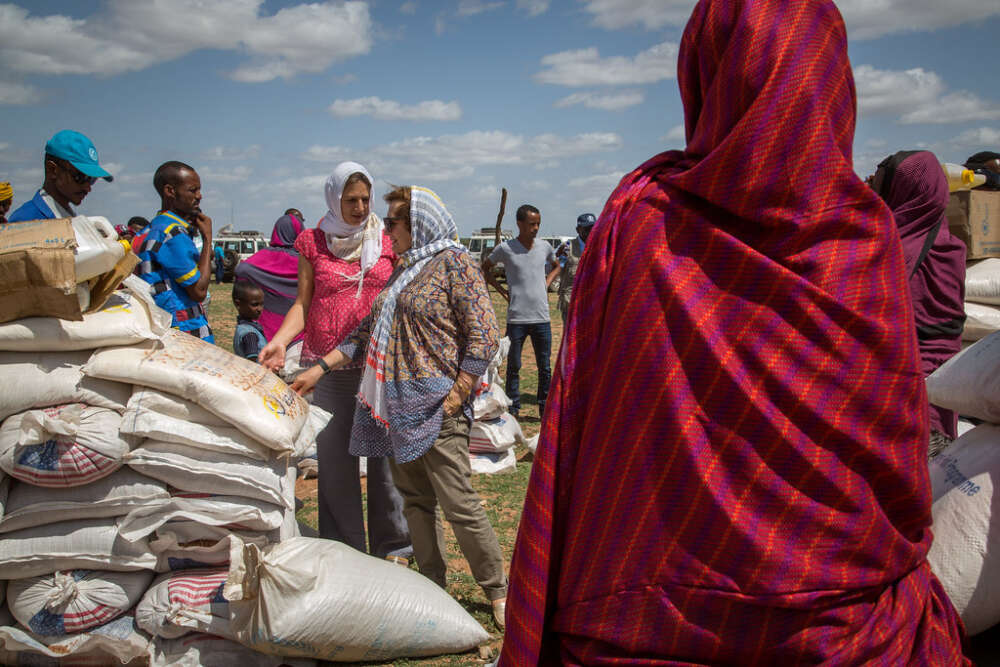
For one, we need to change the way we see risk, and then invest accordingly to show people they are trusted. Whether we like it or not, money is power. And money is going to the wrong places. In the name of ‘accountability,’ we fund major agencies to set up mechanisms that allow them to tick an accountability box, while still controlling the narrative and the resources. This promotes rolling out aid programs that risk keeping people in crisis rather than lifting them out, while collecting a bit of feedback on the side. But providing feedback without seeing change does not make sense to people – and, as a result, many stop engaging with agency-led accountability mechanisms because their concerns are not addressed. They see right through it.
We humanitarians also can’t seem to shake the habit of hiding behind a narrow understanding of risk in order to perpetuate the status quo. The risks considered the greatest should be those to the people and communities affected by crises, which are becoming more frequent and more ferocious. Period.
Yet we roll out narratives around risks that prioritize taxpayers, perpetuating myths about how the biggest actors are the most accountable in a sea of local corruption and the most neutral in complex conflicts. We need to cut these self-soothing stories and understand ‘risk’ holistically – continuing the way we’ve always done things also carries risk. Being more community-led might hurt the power holders of the current international system, but our evidence shows it could have a much more meaningful impact in the long term.
Another element that needs to change: accountability needs to come from the outside. Right now, the humanitarian system is ‘marking its own homework.’ This cannot last and surely must come undone soon. Accountability is a big word that the aid system treats like a little, fluffy one. Multilateral organizations float between jurisdictions and rely on self-reporting and vague standards when it comes to accountability. More support should be given to those applying scrutiny – not to tear things down, but to make them more responsible, in the same way you would expect of other life-saving systems like healthcare and firefighting. When someone dies or suffers unnecessarily in a hospital as a result of bad decisions, we don’t really accept explanations like ‘but we meant well,’ or ‘we had signed up to the right standards.’ We shouldn’t in aid programming, either.
You argue that money is going to the wrong places and that more community-led funding would have a greater impact. What might a different funding model look like in practice — one that shifts power away from large agencies and towards communities?
Fundamentally, I wish there were caps on wealth, no billionaires and that spending overall was more just, but that isn’t yet the world we inhabit. So, in the meantime, while we do need donor systems, more money should flow into the communities in crisis.
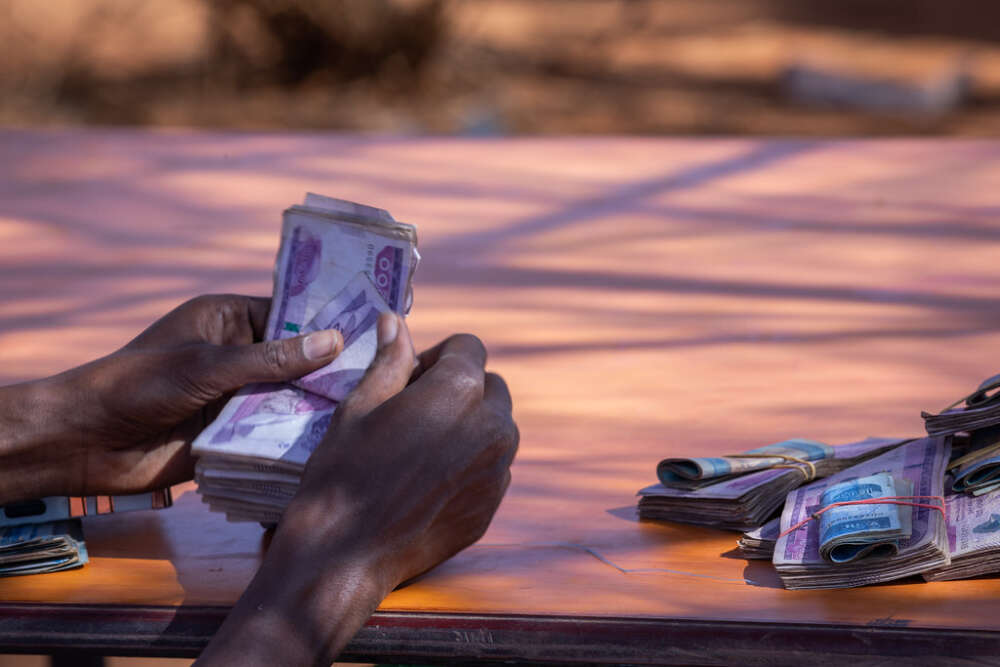
One way to achieve that would be to calm down on the paperwork. An argument against local leadership is that nobody has the capacity to sign the thirty thousand contracts that would go hand in hand with working directly with local partners. But if the aid isn’t effective, having fewer contracts won’t be more efficient. Yes, micromanaging many small contracts is a lot of work – but what if we don’t micromanage? Flexible funding, given with the same trust that is afforded the UN, is not much extra work. Why not try?
Another way is for Official Development Assistance (ODA) funders to use different intermediaries. If intermediaries are deemed necessary or simply more practical, then channeling the bulk of the money through the UN is not the only, or the right, answer. There are more localized pooled funds, like Sudan’s Local Response Pooled Fund, there are non-governmental organizations (NGOs) committed to reducing their own footprint and costs to ensure more money ends up where it’s needed, as well as several philanthropic funding mechanisms being rolled out by the likes of the Center for Disaster Philanthropy (CDP) and the Resilio Fund. Better still, there are diaspora initiatives (from Myanmar, Palestine, Sudan) in many countries already channeling funding to local initiatives far and wide. Surely, there is also a plethora of local entities that could serve as intermediaries, channeling more funds more flexibly and more locally.
At any rate, it is critical to reevaluate risk. We don’t track the layers of wastage in large, overly bureaucratic institutions, but we obsess over corruption risk in small initiatives. As a smarter colleague of mine says, giving 100 million to a huge organization presumed to have minimal fraud risk can still generate the same expected wastage as giving 1 million to tiny NGOs with fictional high fraud rates, once you consider how the money is used rather than just whether or not it is stolen. In other words, continuing the status quo of weak targeting and inefficient delivery carries significant risks, too. We can therefore afford to take more risks when localizing.
To enable more imaginative funding models, we should also probably stop talking about accountability to taxpayers in ‘donor countries’ as an excuse for not prioritizing community views. It seems that in such a polarized world, dominated by the ‘enshittification’ of information, the taxpayers who don’t want to support solidarity with people in crisis are not really concerned with tracking corruption or due diligence – they are simply not in favor of the very idea of aid or solidarity. Many taxpayers overestimate how much money hits foreign shores, because they feel things are getting worse at home.
A smarter strategy, dare I say, would be to try to improve things domestically to negate the fear of global solidarity, while simultaneously showing taxpayers the impact of aid by relying on the views of those who are supposed to benefit from it – not through quantified reporting from institutions, when trust in institutions is at an all-time low.
Can you flesh out how such a model would improve realities on the ground, and why it would have a more meaningful impact for the longer term?
I don’t believe aid money going directly to community groups means that suddenly everything is rosy. There is a major issue with state accountability, and indeed a global accountability issue, and I don’t want to skim over that. Countries contributing to the root causes of crises and then providing aid for an inadequate clean-up will always be greeted with scepticism. And of course, corruption happens the world over, which is why local communities should always be able to hold people to account for fair, appropriate support, no matter who the actors are.
International actors also often take a king-making approach to what they call localization, overfunding local entities that walk and talk like international ones, instead of celebrating the diversity and indeed the smallness and unique approaches of grassroots work.
Ground Truth Solutions has collected reams of data on aid being ineffective, simply because it’s not what communities want. This leads to people telling international aid actors to leave their communities because they are doing the wrong things, or selling the aid they receive for cash at lesser values (and sometimes putting themselves at risk in the process). Aid is received better by communities when it aligns more with people’s preferences, usually because it (1) comes with choice (as is the case with cash-based assistance), (2) supports people’s own efforts to pull themselves out of crisis (future-focused aid, like livelihoods and education) or (3) because it simply is better aligned with preferences and existing efforts. Our work on mutual aid shows that community-led efforts are heroic but that their leaders are exhausted and burnt out. Better support for local efforts would surely show much more bang for every aid buck – support provided without trampling over existing systems, allowing people to rebuild and hold those with power accountable for the future they deserve.
I can’t speak for everyone enduring a crisis, but we often hear calls from communities living with conflict for international actors to play more of a monitor or an advocate role, not an implementation role. There’s a clear logic to that. Many, especially in a place like Gaza, see a vital role for international actors in pushing for justice and accountability for occupation and violence, more than just aid delivery. And for countries with high levels of perceived corruption and low community confidence, a more evaluative or norm-setting role is often welcomed by communities. At the heart of it, people just want to feel supported during terrible times, not patronized. They want to see those responsible be held to account.
For those who would like to engage more deeply with your “one thing,” what reading would you recommend?
So much! The Australian climate case is inspiring me this week. Our recent global synthesis report with input from 14.000 people impacted by crisis is a wealth of insight, all in a concise package. Otherwise, I’m enjoying Danny Sriskandarajah’s Power to the People: Use Your Voice, Change the World. It’s an accessible and readable bit of inspiration on community democracy when everything feels a bit bleak. George Monbiot’s Out of the Wreckage: A New Politics for an Age of Crisis struck a chord with me, touching on why strong, engaged communities are key to a just future. I just read Yassmin Abdel-Magied’s How to Write about Sudan (inspired by How to Write About Africa), which was a good reminder about how corrupted international narratives perpetuate the accountability farce.
What I would probably not recommend is anything with “Accountability to Affected People” in its title, for all the reasons mentioned above. Finally, I would suggest engaging more with quality, investigative journalism, on whatever topic you like – understanding independent media’s role in holding systems of power accountable may get us closer to cracking the accountability problem in aid.