Reconstructing Trust: Social Cohesion and Recovery in War-Torn Irpin, Ukraine
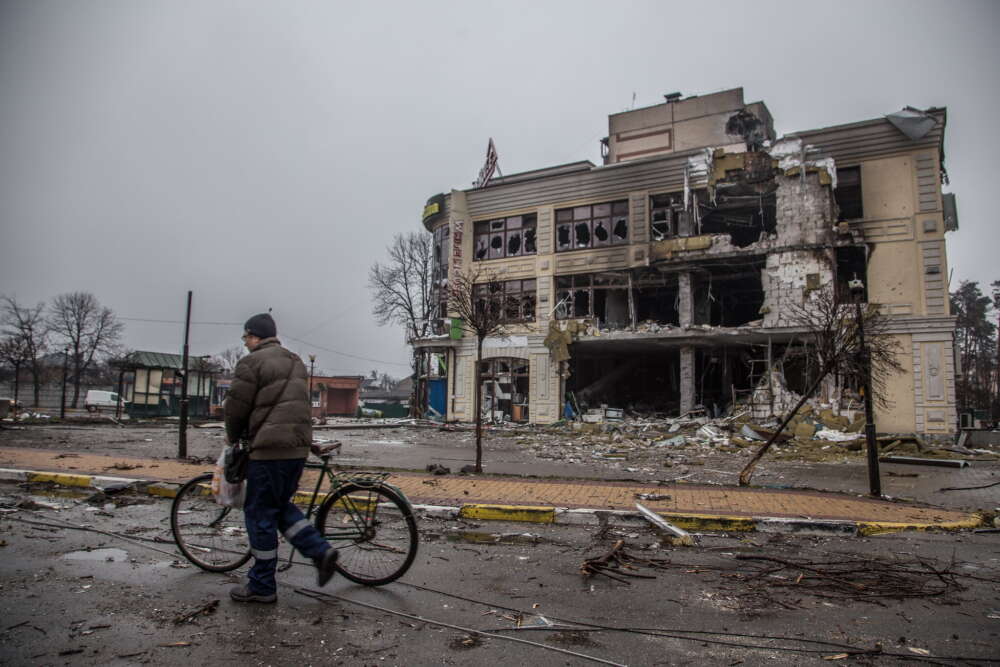
Irpin is a Kyiv suburb that was laid to waste during the first stages of Russia’s 2022 invasion of Ukraine. Since 2022, the town has worked to rebuild what was devastated in the early days of the war; three years after liberation, around 80 percent of housing has been restored, and the rebuilding of critical and social infrastructure is close to completion. But reconstruction is not merely a material matter: it also redistributes power and trust. The case of Irpin offers a view into wartime reconstruction and how it is reshaping Ukraine’s social fabric.
Drawing on a survey and qualitative interviews, this report examines how fairness, transparency and participation in reconstruction affect social cohesion. It analyzes social cohesion in two ways, looking at both the trust among citizens (horizontal) and the trust between citizens and institutions (vertical).
The report’s findings challenge influential policy assumptions that are based on studies from post-civil war reconstruction contexts. It highlights how Irpin’s reconstruction has not deepened divides between social groups: internally displaced persons (IDPs), veterans and civilians do not perceive one another as competitors for aid or resources. Instead, tensions and mistrust in Irpin run vertically, between residents and political-administrative elites.
Again, counterintuitively, transparency mechanisms have not restored credibility. Ukraine and its donors have invested heavily in national transparency platforms and digital oversight tools, including DREAM, Prozorro and the Big Recovery Portal. Yet these systems remain largely unused: 82 percent of Irpin residents report never consulting them. Instead, residents indicate that trust in authorities depends on visible results and accountability mechanisms, whether they be independent audits, visible delivery or the publication of results in channels citizens actually use.
At the same time, Irpin’s experience also points to a strength often overlooked: the town’s horizontal social cohesion appears resilient. Residents report unity and mutual assistance. More people feel like reconstruction has brought people closer together than those who believe it has driven them apart.
Recommendations
Prioritize accountability over the proliferation of high-tech portals; communicate audit results where residents will see them.
Public confidence responds more to visible results than to an abundance of data. Embed accountability throughout the project cycle and publish concise, resident-facing proof of completion (scope delivered, cost/timeline vs. plan, before/after evidence), paired with proportionate independent audits and a simple channel to report complaints.
Scale social cohesion by resourcing what sustains it.
Neighbor-to-neighbor help, self-organized repair and small local NGOs underpin everyday cooperation and reconstruction. Support and scale these mechanisms through micro-grants for community repairs, designated small projects that enable resident participation (with light oversight and small budgets) and flexible core support.
Do not apply lessons from post-civil war reconstruction to Ukraine.
What we know about international reconstruction is heavily shaped by studies on post-civil war reconstruction; Irpin shows that these expectations can diverge sharply from Ukraine’s wartime and post-occupation conditions. Practitioners should interrogate which assumptions travel and generate new knowledge grounded in local evidence when uncertain. Rather than automatically applying frameworks and lessons drawn from civil war contexts, researchers should treat them as hypotheses, test them empirically and collaborate with Ukrainian researchers for contextual sensitivity.
This report was originally published by the Friedrich-Ebert-Stiftung in Ukraine, who generously supported and funded this study.